What is the relationship between Israel, Palestine, and Jerusalem?


In 2023, intense fighting broke out between the Israeli government and the Gaza administration of the Palestinian territories, resulting in the loss of tens of thousands of lives, including civilians.
Earlier, in 2018, U.S. President Donald Trump declared that Jerusalem would be recognized as the capital of Israel and announced the relocation of the American embassy there. This provoked protests from the Arab countries surrounding Israel and strained their relations.
However, when one opens a Japanese atlas, Jerusalem has always been marked as the capital of Israel from the beginning. Why, then, did declaring Jerusalem as the capital suddenly become such a problem? And what exactly are the Palestinian territories?
The Isolated Nation of Israel in the Middle East
People who watch the news may often hear the name Israel. The country is located in the Middle East, or Western Asia. As the “Star of David” depicted on its national flag suggests, many Jews, followers of Judaism live in Israel.

However, looking around its neighbors, we find Egypt to the west, Jordan to the east, and Saudi Arabia to the south—countries largely populated by Arabs and Muslims.
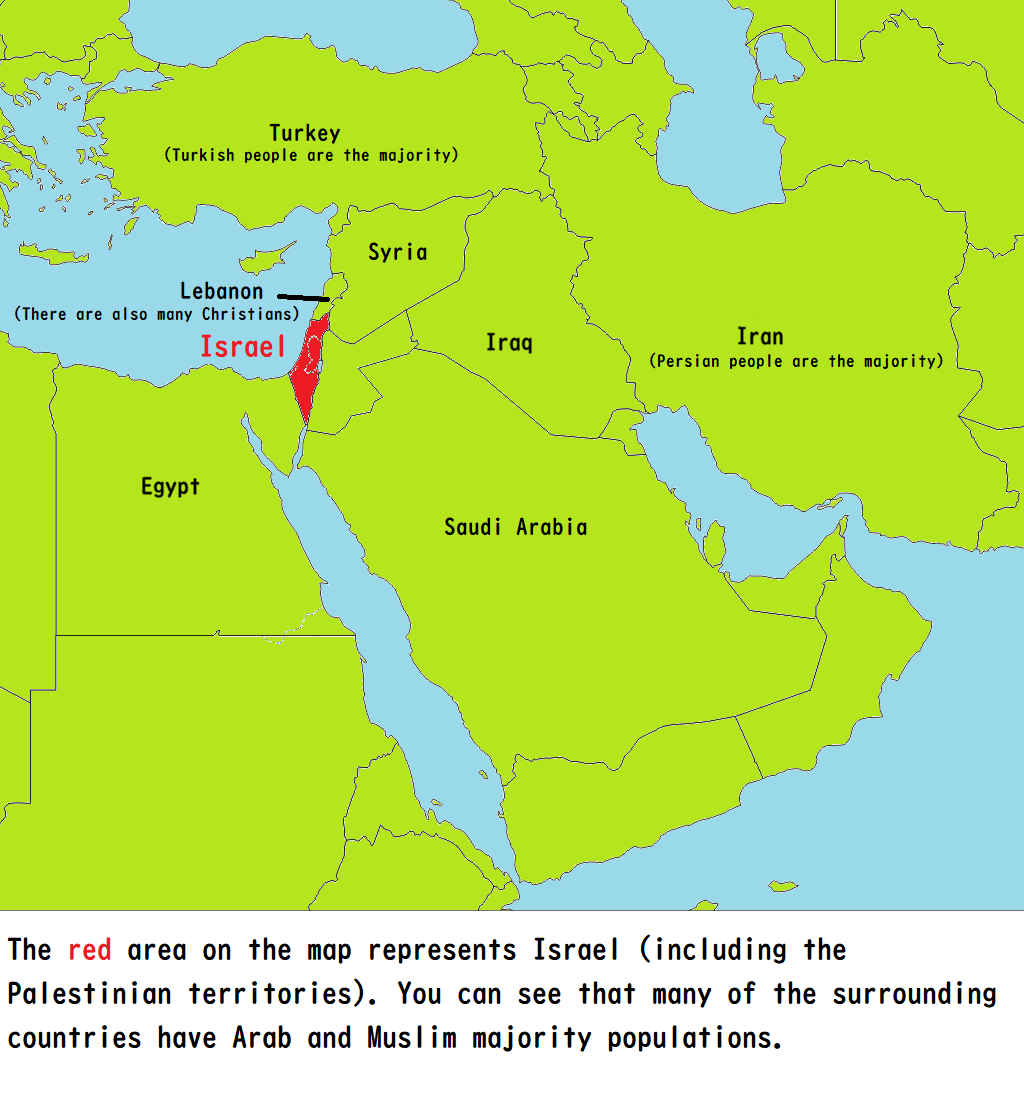
This situation may seem somewhat unnatural. The fact is that the Jewish population in the land of Israel only became large in the 20th century. Why did the Jews come to the Middle East, and where were they before that? Let us explore this mystery through the long histories of the Jewish people, the Arabs, and Jerusalem itself.
The Origins of the Jewish People
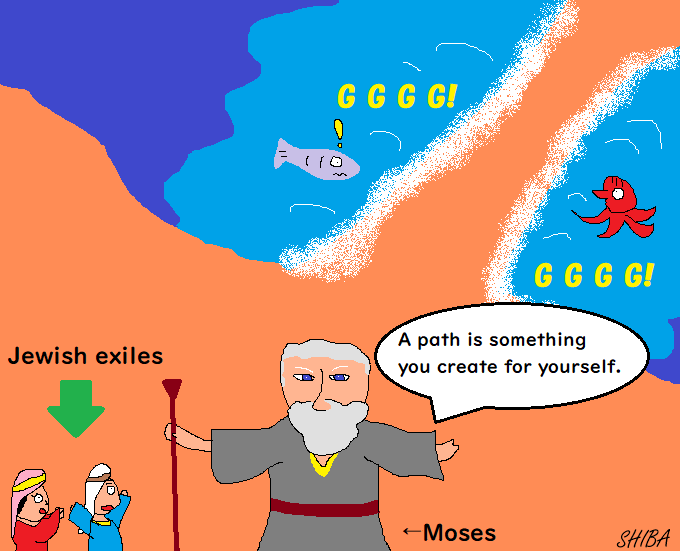
The history of the Jewish people dates back over 3,000 years. In mythology, it is said that a group led by Moses—the man who famously parted the sea to escape from Egypt—founded Judaism, along with the moral code known as the “Ten Commandments.”
Around the 10th century BCE, they migrated to Palestine and established a kingdom there—the Kingdom of Israel. The name “Israel” comes from a hero in Jewish creation myths who received it from God. On the other hand, “Palestine” traces its name to the Philistines, the local people who fought against the ancient Jews in that era.
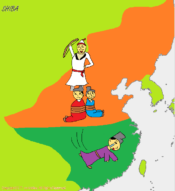
In the ancient Kingdom of Israel, King David, who united the tribes, and King Solomon, who built the Temple, are well-known figures. However, the kingdom later split into northern and southern parts. Eventually, the northern Kingdom of Israel was destroyed by the Assyrian Empire, and the southern Kingdom of Judah was conquered by the Neo-Babylonian Empire.
The latter event is known as the Babylonian Captivity, during which many Jews were taken to Babylon, the capital. Later, the Neo-Babylonian Empire was defeated in the 6th century BCE by the Achaemenid Persian Empire, allowing the Jews to return to Palestine. Nevertheless, foreign rule over the region continued for many centuries.
Diaspora
By the 1st century BCE, the region came under Roman rule. During that time, Jesus Christ was born in Palestine. As we know, he was the founder of Christianity. Because his teachings criticized Judaism, he was executed by Jewish authorities. This event became one of the reasons why Christians viewed Jews unfavorably in later centuries.
About 30 years after that, the Jews revolted against Roman oppression. The rebellion was crushed, and even their Temple was destroyed. The western wall that survived this destruction is today known as the “Wailing Wall” and is regarded as a holy site for Jews.
Another rebellion occurred in the 2nd century CE, but again it failed. Eventually, Jews were banned from entering Jerusalem—a restriction that lasted until the 4th century.
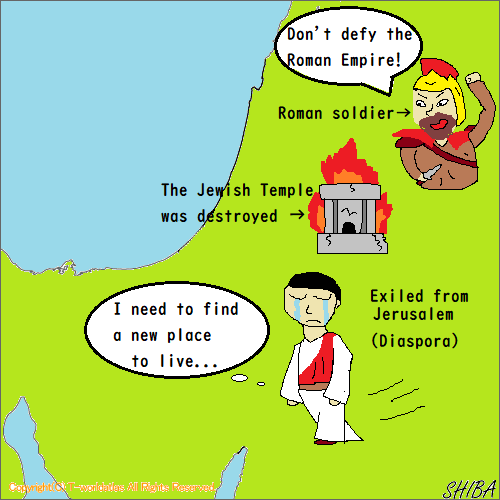
Thus, seeking new lands, the Jews began to disperse from Palestine. This scattering is known as the Diaspora. They spread across various regions—the Arabian Peninsula, North Africa, and Europe. Of these, the fate of the Jews who settled in Europe would prove especially harsh.
Discrimination and Prejudice
By the Middle Ages, many Europeans relied on Christianity as the foundation of their daily lives. Jews, meanwhile, maintained their own lives and culture through strong communities and networks in various places. To Christians, however, this seemed strange, and Jews came to be subjected to various forms of discrimination and prejudice. For example, in an age before science had fully developed, whenever plague or famine occurred, Jews were often blamed for causing them.
It was also difficult for Jews to obtain ordinary jobs, so many of them came to work in fields such as finance, which were considered “lowly” at the time. Even today, the large number of wealthy Jewish families is partly the result of this history.
Islam and the Holy Land
In the 7th century, Islam emerged in the Middle East. Through the conquests of Muslim powers, Palestine also came under their control, and many Arabs moved into the region. Jews in the Middle East also came under Islamic rule. Some converted from Judaism to Islam, but not everyone was forced to convert.
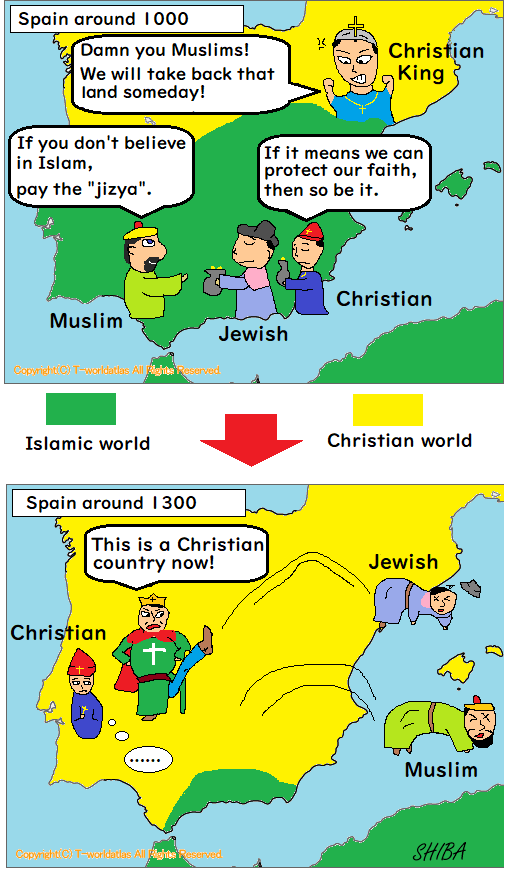
In fact, Islamic dynasties were relatively tolerant of other religions. As long as non-Muslims paid a certain tax, called the jizya, they were allowed to live there. This may have been necessary in order to govern the Middle East, where many ethnic groups and cultures had mixed since the days of Mesopotamian civilization. On the other hand, in the Iberian Peninsula, which was under Islamic rule from the 8th to the 15th century, some Jews were even forced into exile once power shifted to Christian kingdoms.
 In addition, among Muslims there is a tradition that the Prophet Muhammad ascended from Jerusalem and met God, Allah. For this reason, Jerusalem also became a holy city in Islam.
For Christians as well, Jerusalem, where Jesus was executed, was an important holy site. The Crusades of the 11th to 13th centuries were driven by the desire to “take back the Holy City of Jerusalem from Islam.”
In this way, Jerusalem became a special city for Jews, Christians, and Muslims alike. Of course, conflict among the three groups was frequent, but over the long term, these believers coexisted in Jerusalem.
The Zionist Movement
In the 19th century, as movements to build nation-states emerged in Europe, a similar desire arose among Jews to have their own country. Behind this was also a painful awareness that because they did not have their own state, Jews were discriminated against wherever they went. So a movement developed to create a new country in the land of Palestine, the homeland of their ancestors, and this was put into action. This is known as the Zionist movement.
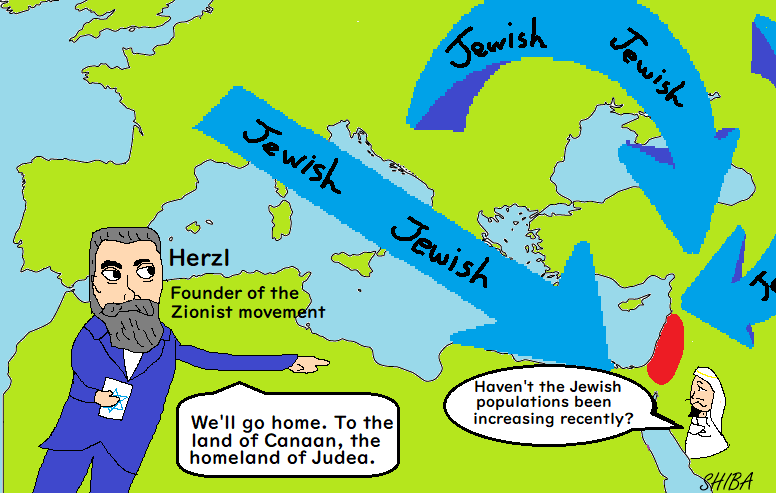
At the time, however, Palestine was under Ottoman rule, and most of its inhabitants were Arabs. Jews, who were different in religion, culture, and language, began to move there in large numbers. At first, the Arabs accepted them, but as their numbers increased, they began to object, and conflict broke out between the two sides.
Under British Rule
In the 20th century, the First World War broke out. Britain, which was at war with the Ottoman Empire, asked wealthy Jews for financial support in order to raise war funds. In return, it promised to create a “Jewish homeland” in Palestine, which was part of the Ottoman Empire. At the same time, Britain also encouraged an anti-Ottoman revolt among the Arabs and promised them independence as an Arab state in return.

Then, in the middle of the war, a revolution broke out in Russia and the Soviet Union was established. During the revolution, Jews in the country were treated as dangerous elements, and many were massacred in what became known as pogroms. To escape the violence, more Jews migrated to Palestine. After the war ended, Britain broke its promises, occupied Palestine, and began controlling immigration.
By then, clashes with the Arab population were already happening constantly, and in order to maintain public order, Britain had no choice but to temporarily restrict Jewish settlement. Many Jews, left with nowhere to go, eventually migrated to the United States.
The Holocaust
In the 1930s, when Hitler’s regime was established in Germany, attacks on Jews intensified because of his strong sense of ethnic nationalism.
In 1939, World War II broke out. As Germany occupied various parts of Europe, the Jews who remained there were gradually sent to concentration camps, where they were forced into labor and then killed. This was the Holocaust. Even Anne Frank became one of its victims. Under such hellish conditions, international public opinion gradually became more sympathetic toward Jews.

The Founding of Israel and the Middle East Wars
After the war ended in 1945, and with that public sympathy behind them, the State of Israel was finally founded in 1948.
Who supported its creation was United States. Britain, devastated by the war, no longer had the capacity to govern Palestine, while in the United States a huge Jewish community had formed through immigration. Politicians also had to take this group into account if they wanted to win elections. This is part of the background behind America’s continued support for Israel to this day.
On the other hand, the Arab people living in Palestine strongly opposed the founding of Israel. The surrounding Arab states, such as Egypt, were also drawn into the conflict, and the Middle East wars broke out.
However, due to the lack of unity among the Arab nations, the war ended in an Israeli victory. Nevertheless, the Arab side did manage to control the region, with the Egyptian army occupying Gaza and the Jordanian army occupying the West Bank, which remained under their control until 1967.
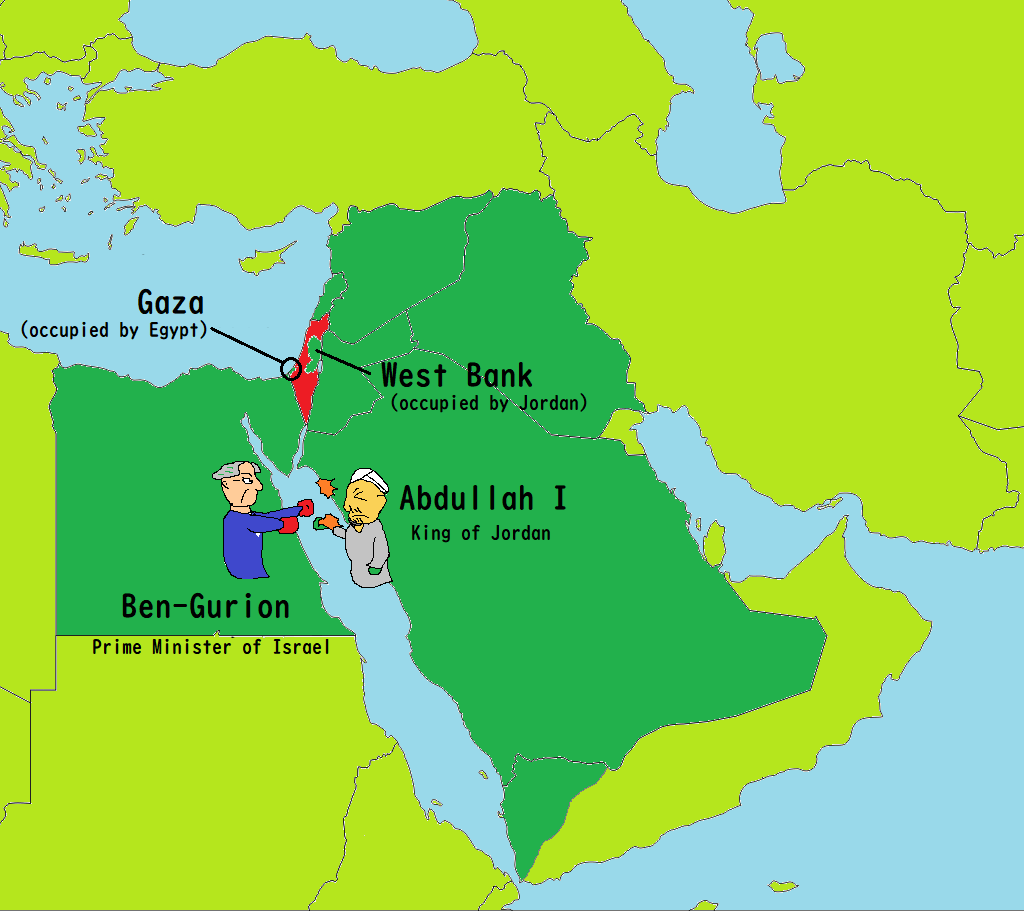
After that, the Israeli government became increasingly hostile toward the Arabs living in the country, that is, the Palestinians. In other words, they were oppressed and driven out by various means. As a result, many Palestinians became refugees. It is ironic that the persecution once suffered by the Jews was now being inflicted on the Arabs.
The Arabs of Palestine
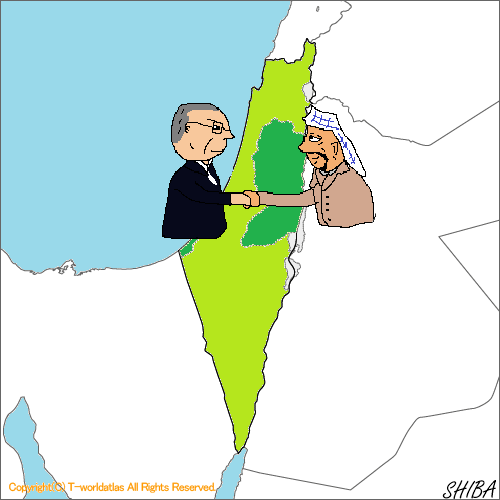
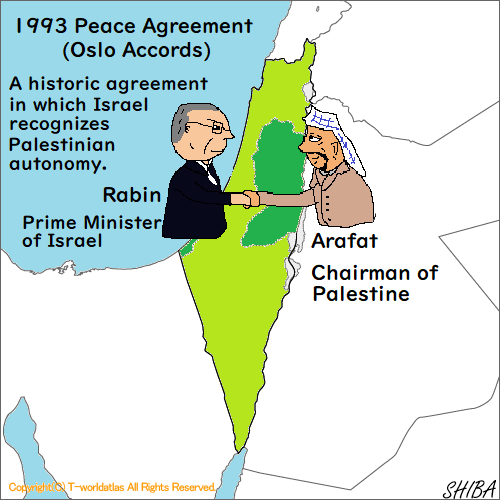
In the 1960s, the Palestine Liberation Organization, or PLO, was established, and movements seeking Arab autonomy also became more active. After a difficult path, the Oslo Accords were concluded in 1993 between Israeli Prime Minister Rabin and PLO Chairman Arafat. As a result, the Palestinian territories were created, and today Arab self-rule is recognized in only a small area centered on the West Bank and Gaza, each governed by its own administration.
In reality, however, many Jews opposed the creation of the Palestinian territories, and in 1995 Prime Minister Rabin, who had signed the Oslo Accords, was assassinated. The current Netanyahu administration also appears to hold a negative view of the Oslo Accords, and the Israeli government seems to continue putting pressure on the Palestinian territories.
In particular, Hamas, the party that governs Gaza, strongly opposes the Israeli government. For that reason, armed clashes between Israel and Gaza have broken out repeatedly, and the fighting since 2023 has been especially large in scale.
Israel’s attack on Iran together with the United States in 2026 was also partly justified by the fact that the Iranian government supports Gaza.
Meanwhile, Palestine is gradually being treated more like an independent state in some ways, such as by joining international organizations separately from Israel and sending its own Olympic team. Its future remains closely watched.
Jerusalem, the Holy City of Three Religions
Jerusalem is an important city for Judaism, Christianity, and Islam. Making it the capital of the Jewish state of Israel would amount to the Jewish people, or Jews, “monopolizing” the city.
Many Arab countries, including Saudi Arabia, do not even recognize the State of Israel itself. Naturally, they cannot accept Jerusalem, which is also holy to them, being designated as Israel’s capital.
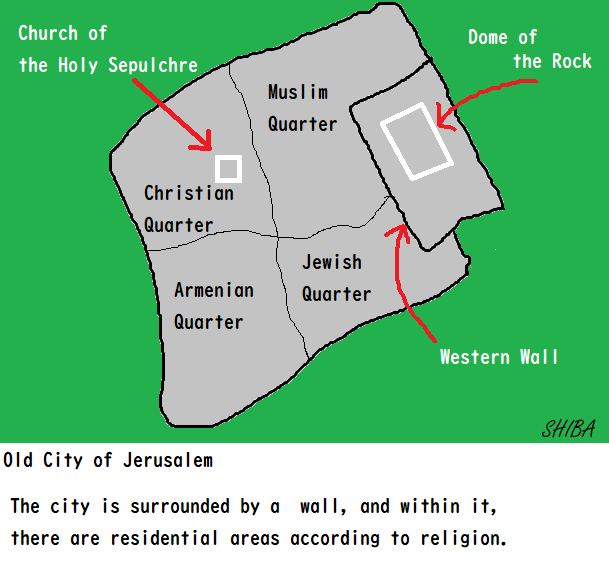
Many countries that maintain diplomatic relations with Israel, including Japan, place their embassies not in Jerusalem but in Tel Aviv, partly to avoid provoking the Arab states. Some atlases published in Japan also include a note saying that “Israel designates Jerusalem as its capital, but it has not received international recognition.”
Can this city, standing on such a delicate balance among three religions, continue to remain stable? The long history of conflict and coexistence seems to hold the answer.