Why is Rio de Janeiro famous even though it’s not the capital of Brazil?

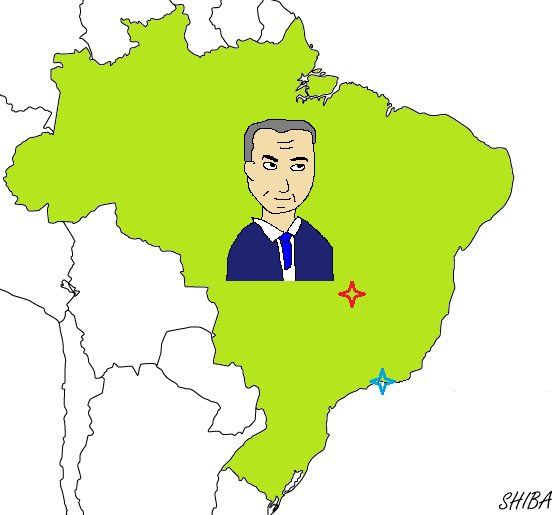

You may have seen on television a scene where a giant statue of Christ stands on the edge of a cliff, overlooking a vast blue sea below. Rio de Janeiro—often simply called Rio—is one of Brazil’s most iconic cities, famous for its beaches and carnival celebrations. In 2016, it hosted South America’s first Olympic Games, drawing global attention. However, when you look at a world map, you’ll notice that Brazil’s capital is not Rio de Janeiro but Brasília. And unlike New York in the United States, Rio is not the country’s largest city either. That distinction belongs to São Paulo, located a bit west of Rio, with a population of about ten million. Rio, with roughly seven million residents, is Brazil’s second-largest city. So, it is neither the capital nor the biggest city—yet it remains one of the most recognized cities in Brazil. Why is that? 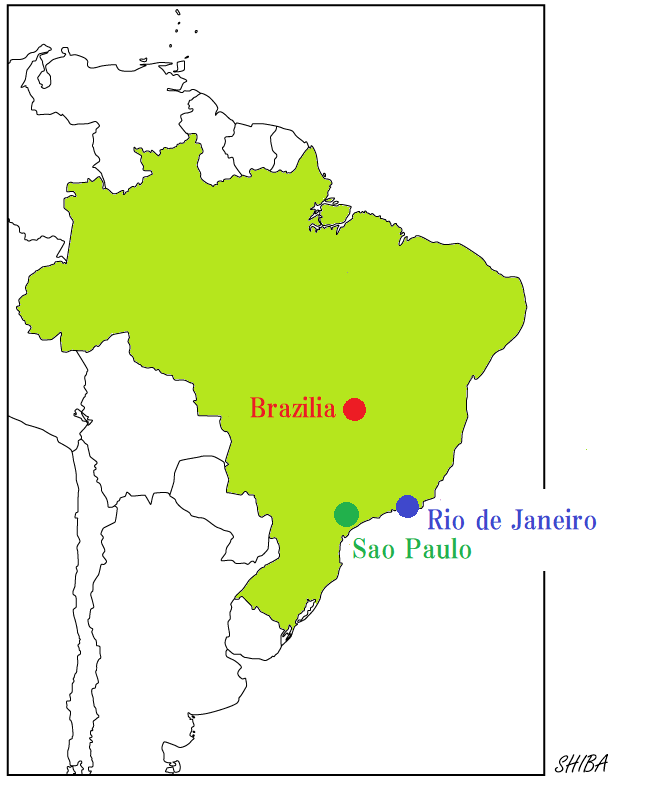
Brazilia and Rio de Janeiro
To get straight to the point, Rio de Janeiro is Brazil’s “former capital.” The capital was moved to Brasília in 1960. As will be explained later, Brazil gained independence in 1822, but even before that—during the colonial era—Rio de Janeiro was the administrative center of Brazil. In other words, compared to Brasília, Rio has a much deeper historical significance. So why was the capital relocated? Let’s explore this along with Brazil’s history.
River of January
In 1500, eight years after Columbus arrived in the Americas, the Portuguese navigator Cabral landed on the eastern coast of South America, claiming it as Portuguese territory. This marked the beginning of Brazil, and the first capital (the base of the colony) was a city called Salvador. 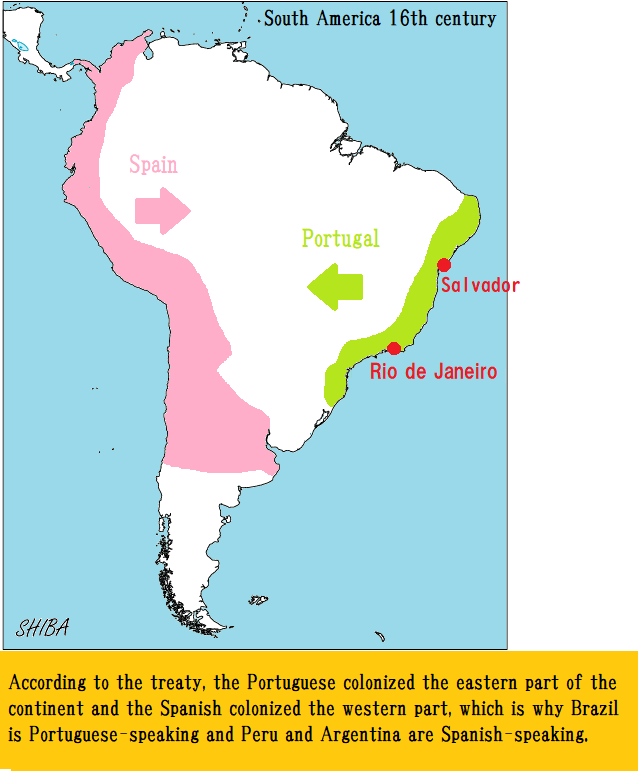 After this, the Portuguese continued to explore along the coastline, and in January 1502, they discovered a bay ideal for a port town. They named it “Rio de Janeiro,” which means “River of January” in Portuguese.
The Sugar Age and The Gold Age
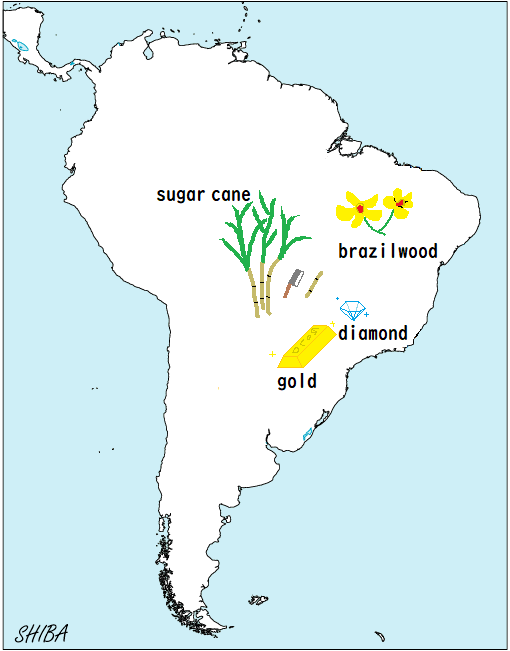
Brazil’s name comes from the Pau-Brasil tree, which was used for making dye. When it became a colony, there were no other valuable exports. But in the mid-1500s, as Europeans start drinking coffee and tea, the demand for sugar grew. Brazil developed by producing sugarcane. In the 18th century, gold and diamond mines were found, leading to a gold rush in Brazil. These were mined in Minas Gerais, far south of Salvador, shifting the country’s economy to the south. The port town that developed as the shipping port for these resources was Rio de Janeiro, located close to Minas Gerais. In 1763, the Governor-General of Brazil (the representative of the King) finally moved from Salvador to Rio de Janeiro, and this city took its first steps as the capital of Brazil.
Independence from Portugal
At the end of the 18th century, the French Revolution broke out in Europe, and after the ensuing turmoil, Napoleon attacked various regions. Portugal was no exception. In 1807, the Portuguese royal family, sensing Napoleon’s invasion, fled the country and crossed the Atlantic to take refuge in their colony, Brazil. As a result, Rio de Janeiro essentially became the “capital of Portugal” in place of Lisbon. 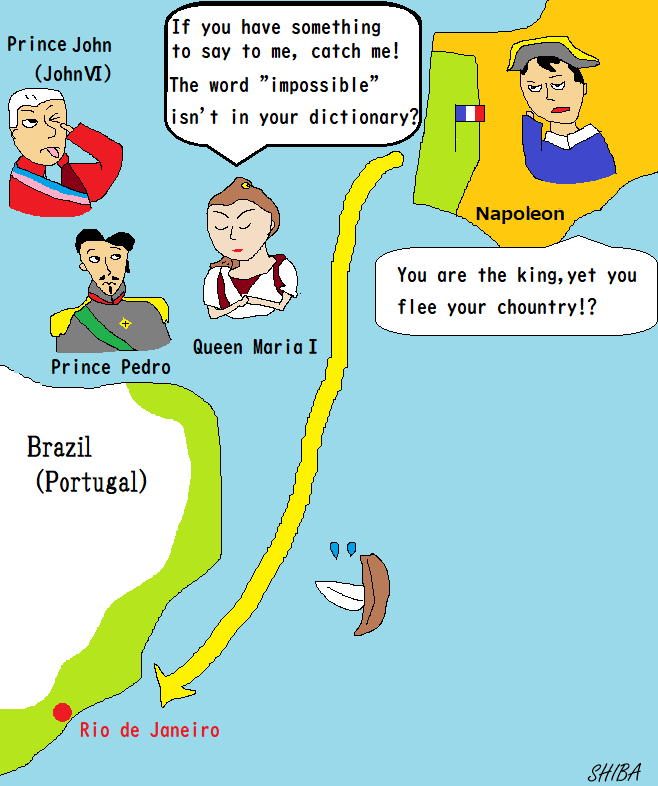 After Napoleon’s fall, in 1815, it was deemed inappropriate for the monarch (at the time, Queen Maria I) to reside in a colony, so Brazil was elevated to the status of “part of Portugal proper” (meaning it was treated on par with Portugal itself). However, when a revolution broke out in Portugal in 1820, King João VI, who had become the Portuguese monarch in Brazil, returned home—but this raised concerns that Brazil might be downgraded to a colony again. Wishing to avoid this, the people of Brazil made the prince who had remained behind (Prince Pedro) their monarch and declared independence in 1822. This was a bold move—if they were to become a colony again, they would rather become independent from Portugal. Of course, the Portuguese government opposed this, but around the same time, other South American countries like Argentina and Colombia were also achieving independence from Spain, and ultimately Brazil’s independence movement succeeded.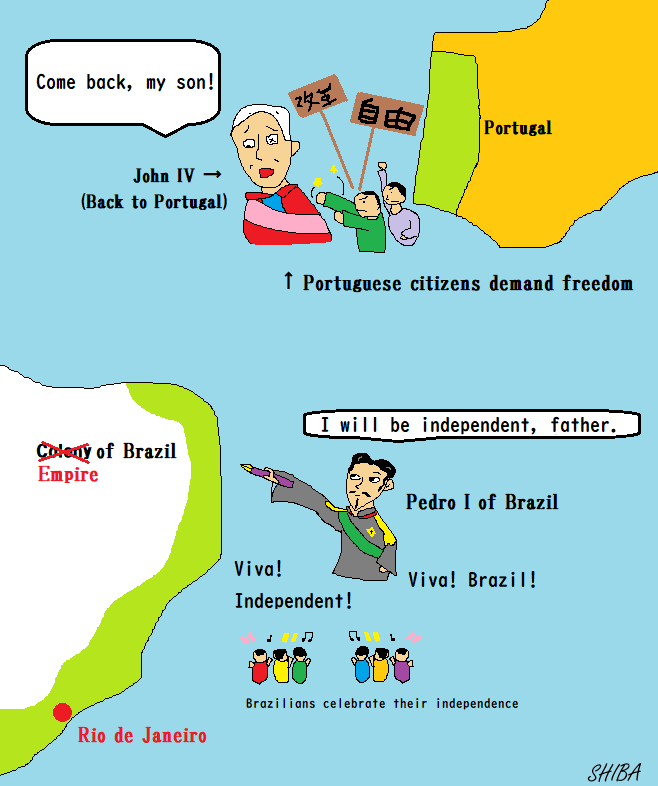
The Savior
To return to the topic of Brazil’s economy: the sugar that was mentioned earlier lost out to competition from Cuba and other Caribbean islands by the 19th century, and Brazil also could not rely for long on gold or diamonds, since their quantities were too limited. What ultimately rescued Brazil’s economy was coffee, which had been introduced as early as the 18th century. Coffee began to be cultivated seriously in the 19th century, especially in São Paulo state, where the soil was exceptionally well-suited for it, leading to vigorous production and export. The 19th century was also a time of lively debate among citizens in Europe, and coffee—unlike alcohol, which dulls the mind—was popular for its invigorating effect. Riding the wave of this boom, Brazil continued to develop. Additionally, São Paulo became a hub for coffee-related enterprises, drawing many people and eventually transforming into the country’s largest economic center. Today, São Paulo is not only the largest city in Brazil, but also one of the largest cities in the Southern Hemisphere. 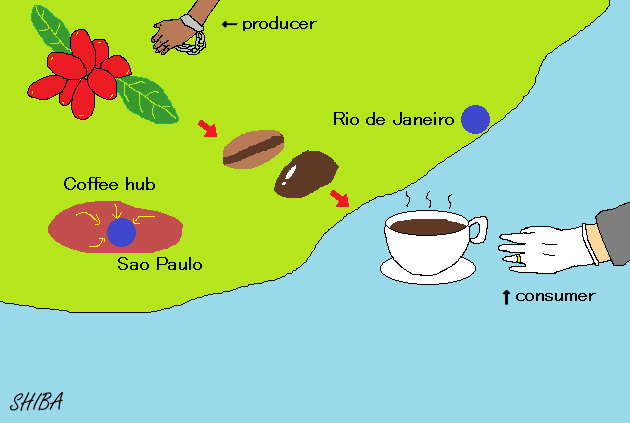 However, whether it was sugarcane or coffee, the labor force for cultivation was made up largely of enslaved Africans and their descendants. This is why Brazil was one of the last countries to abolish slavery. In the late 19th century, Emperor Pedro II finally issued a declaration of emancipation, but in doing so lost the support of those opposed to abolition, and in 1889 even the monarchy itself was abolished. Brazil then became a republic, led by a president.
A Beautiful Port Town
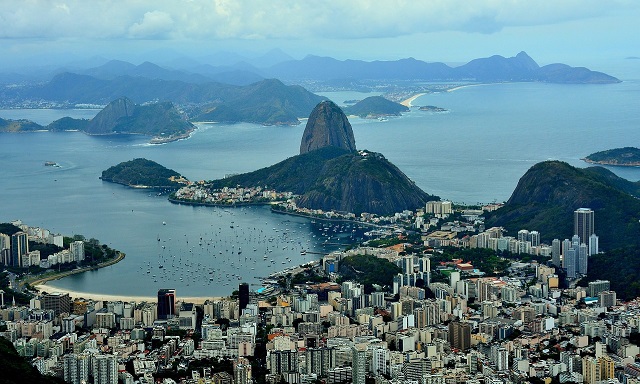
Even into the 20th century, Brazil continued its development centered on agriculture, especially coffee and sugarcane. As the country boasts the fifth largest land area in the world, it can be said that there was plenty of land available. After the emancipation of slaves, immigrants and other sources of “cheap labor” were used, including a large number of Japanese (and Japanese-Brazilians) who came after the Meiji Restoration. Politically, there was also a long-term dictatorship under President Vargas, but during World War I and World War II, the country itself was never a direct battlefield (although soldiers were dispatched and casualties did occur), so compared to Europe and Asia, there were no major transformations. During this period, Rio de Janeiro remained the capital throughout. As both the capital and a port city, Rio de Janeiro was quite literally Brazil’s main gateway, and perhaps because of this, much energy went into beautifying the urban landscape; eventually, the city came to be regarded as one of the world’s three great natural harbors. In 1931, the famous Christ the Redeemer statue on Corcovado was also completed. 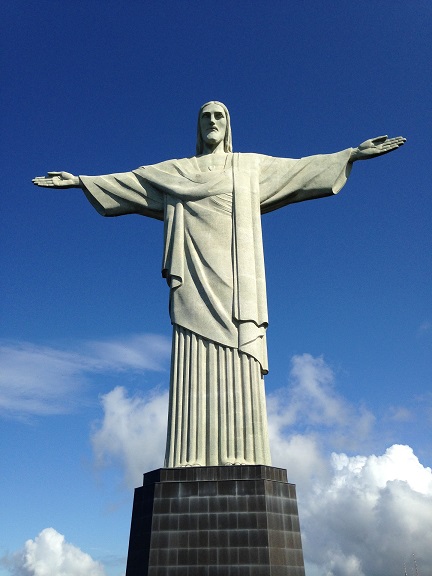
A World Heritage-listed capital
However, whether it is Rio, Salvador, or São Paulo, all of Brazil’s major cities are located near the coast, creating a significant gap between the inland and coastal regions. Along with population growth, urbanization progressed as people migrated from rural areas to the cities. Many poor residents built slums on the outskirts of Rio—known as favelas. In addition, the widespread use of automobiles led to traffic congestion and other transportation problems. To address all of these issues at once, the government decided to build a new capital. The idea was that constructing a futuristic city adapted to automobile society in the underdeveloped inland region would give new momentum to Brazil’s growth. Under President Kubitschek, the new capital Brasília was completed in 1960. Its central area was designed entirely with grade-separated intersections to minimize traffic congestion. When viewed from above, the cityscape of Brasília resembles the shape of a jet aircraft—a symbolic design conveying the message that Brazil was “soaring into the future.” 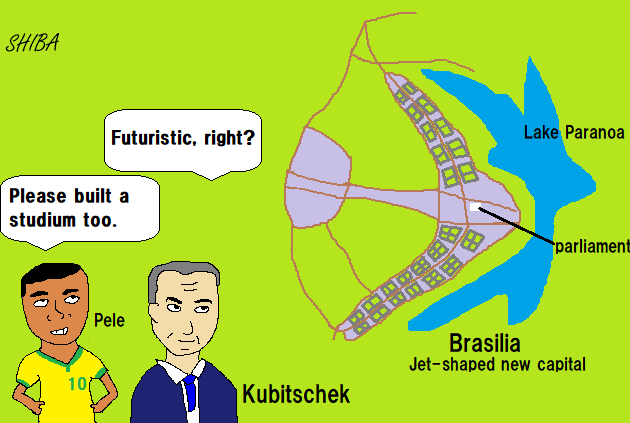 This futuristic city was registered as a UNESCO World Cultural Heritage Site in 1982. However, building Brasília required enormous costs. Ironically, the expenses of constructing the new capital plunged the government into financial difficulties (though that was not the only cause), and the country faced an unstable period that even saw the emergence of a military regime.
Problems not Solved
About sixty years have passed since the capital’s relocation. Brasília has continued to develop and now has a population of over two million. On the other hand, the population growth of Rio de Janeiro far outpaces that of Brasília, and the worsening security in its slum areas remains a serious problem. Moreover, the development of the Amazon has led to environmental destruction, sparking controversy over whether inland development has truly benefited Brazil’s growth. President Kubitschek’s vision has only been partially realized, and even today Brasília’s “status” has yet to surpass that of Rio.
The charm of Rio
Although Rio de Janeiro relinquished its role as the capital, it still retains its famous Christ statue and stunning natural scenery. The city, symbolized by its world-renowned Carnival, continues to serve as the cultural heart of Brazil. These enduring attractions keep drawing people in—and this vital energy is precisely why Rio de Janeiro is still regarded as Brazil’s representative city.