Civilization
I have to admit, even as I write this, the title does seem a bit over the top—so if you thought so too, you’re absolutely right. I’d like to briefly share my own thoughts, based on what I’ve learned, about how humanity went about building what we call civilization.
What is civilization?
First of all, what exactly is civilization? Of course, it’s easy to say that our current society is civilization itself, but where is the line between civilization and non-civilization? I don’t think human societies of the Paleolithic era can be called civilizations, but what about the Yayoi period(around 3
rd BC to 3
rd century AD in Japan)?
According to the Goo Japanese Dictionary on the internet, “Civilization: A state in which human knowledge has advanced, society has developed, and people’s lives have become richer both spiritually and materially. In particular, as opposed to spiritual culture such as religion, morality, scholarship, and the arts, it refers to economic and material culture brought about by the development of technology and machinery, as well as the improvement of social systems.”
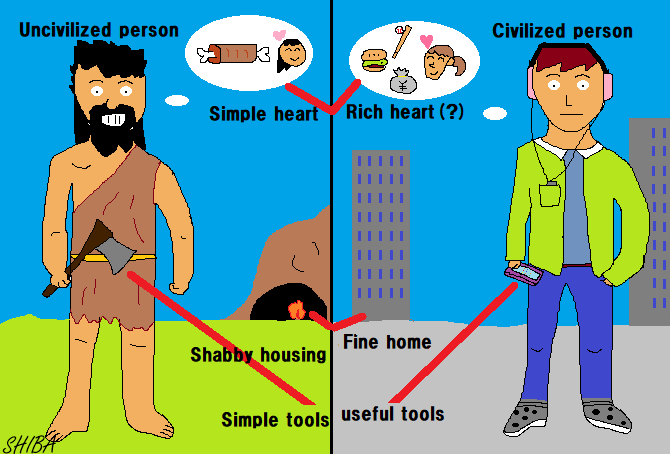
In other words, civilization refers to a place where people live with advanced technology and enriched minds. By accumulating knowledge and experience, humans create tools and food, sometimes confront and overcome nature, and build large, complex human relationships—that is, society. Within such a world, people contemplate who they are and how they should live. I believe this is what we call civilization.
It is said that humanity (Homo sapiens) appeared over 100,000 to 200,000 years ago, but civilizations like this only emerged about 5,000 to 6,000 years ago. In other words, for more than 90% of the time humans have existed, we lived without civilization—in other words, in the era of hunting and gathering. So, what exactly was it that brought about this change?
Mankind’s greatest invention
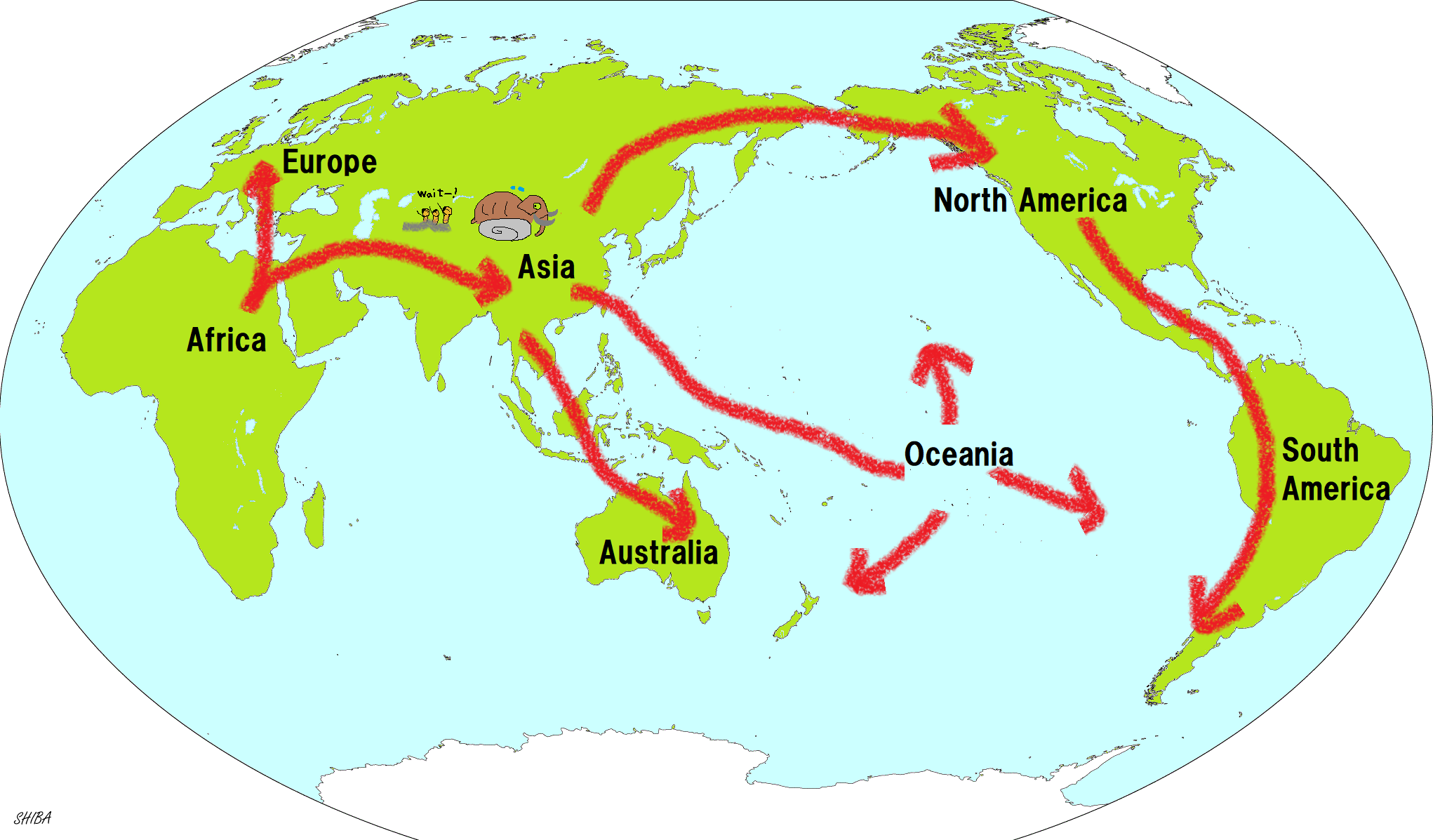
As living creatures, humans absolutely need to eat in order to survive. It is ideal to live in places like tropical rainforests, where food is abundant, but if such forests disappear due to climate change or other reasons, we must secure our own food. It is believed that humans, who originally lived in Africa, experienced climate changes caused by ice ages, and while searching for food (or chasing prey), ended up migrating to Eurasia, Australia, and the Americas.
In order to catch prey, humans developed tools such as spears, bows, nets, and fishhooks. Furthermore, the invention of needles and thread led to the creation of clothing, allowing people to protect themselves from cold and dryness. Once they learned to use fire, they were able to fend off dangerous animals and increased the variety of things they could eat by boiling and roasting. Pottery was also made for this purpose.
In this way, humans gradually became more knowledgeable, but at this stage, securing food was still an unstable process, and the number of people—that is, the population—was not very large. However, about 10,000 years ago, probably somewhere in Eurasia, humanity made a decisive discovery. It was the fact that “humans can cultivate plants with their own hands.” This is just my imagination, but perhaps something like this happened…
 Today, I picked a plant called “wheat” from the grassland again. The grains are small, but when you knead them with water, they taste delicious.
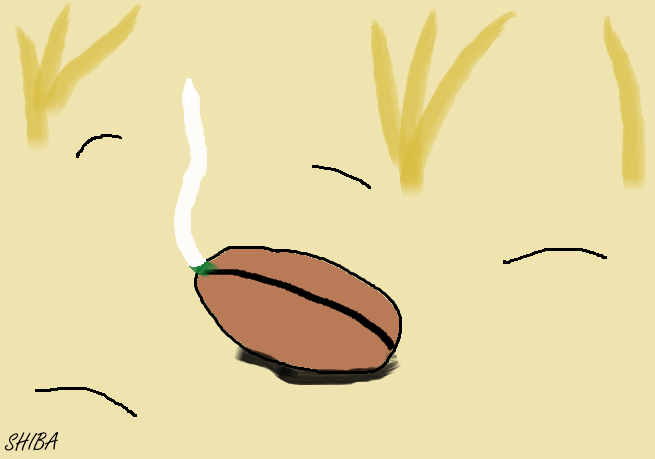
One day, I noticed that a wheat grain lying on the ground had sprouted (I must have dropped some on my way home). After a while, the sprout became a stem and grew bigger. So that grain turns into wheat? How fascinating.
After much trial and error, I found out that if I bury the grains in soft soil and give them fresh water repeatedly, they will become the same wheat as those in the grassland. As long as the conditions are right, I can grow wheat too!
Today, I picked a plant called “wheat” from the grassland again. The grains are small, but when you knead them with water, they taste delicious.
One day, I noticed that a wheat grain lying on the ground had sprouted (I must have dropped some on my way home). After a while, the sprout became a stem and grew bigger. So that grain turns into wheat? How fascinating.
After much trial and error, I found out that if I bury the grains in soft soil and give them fresh water repeatedly, they will become the same wheat as those in the grassland. As long as the conditions are right, I can grow wheat too!
In this way, the method of “producing food by human hands”—in other words, agriculture—was invented. At first, it was probably just a supplement to hunting and gathering, but people came to realize that it provided a stable food supply, and its importance increased rapidly. I forget who it was, but a certain scholar once said, “Agriculture was the greatest invention of humankind.” That is how profoundly agriculture influenced the course of human history.
Settlement and population growth
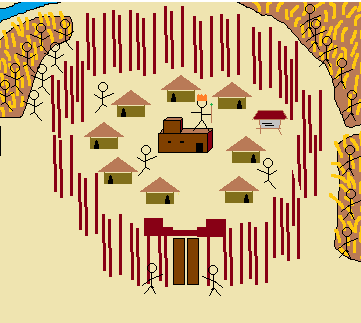
As people were able to obtain food more reliably, the fear of starvation naturally decreased, and the population grew significantly. However, this also brought some challenges. Until then, humans had moved from place to place in search of food, but since they could not take their fields and paddies with them, they inevitably had to settle in one place. In other words, this led to permanent settlement. The increase in population and the shift to settled life eventually gave rise to “communities,” which then developed into “villages” and, later, into “countries.”
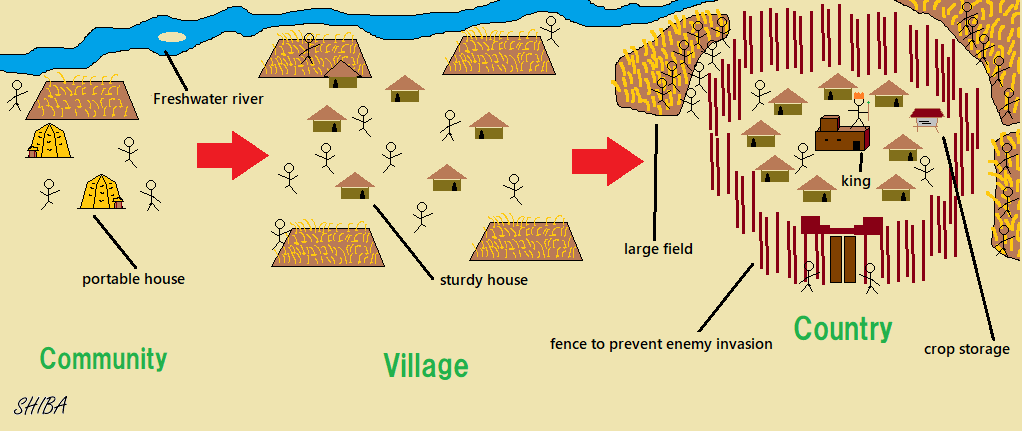
Agriculture also gave rise to cooperative relationships among people. As the population grew, fields and paddies had to be expanded accordingly. However, as farmland became larger, it became difficult for one person to manage everything alone. This made cooperation among people necessary.
When everyone was working together in the fields, common rules naturally developed—for example, if one person splashed too much water around, it would be a nuisance to others. In addition, in order to determine the best timing for sowing and harvesting, people began to study the seasons, which led to the concepts of the “calendar” and “time.” (It is believed that even during the hunting era, people had rules and a sense of the seasons, but these ideas became much more advanced after the start of agriculture.)
What’s more, as the population increased, human relationships became more complex. This inevitably led to more conflicts, which required solutions. Here again, “common rules” were established, eventually developing into “laws” and “punishments.”
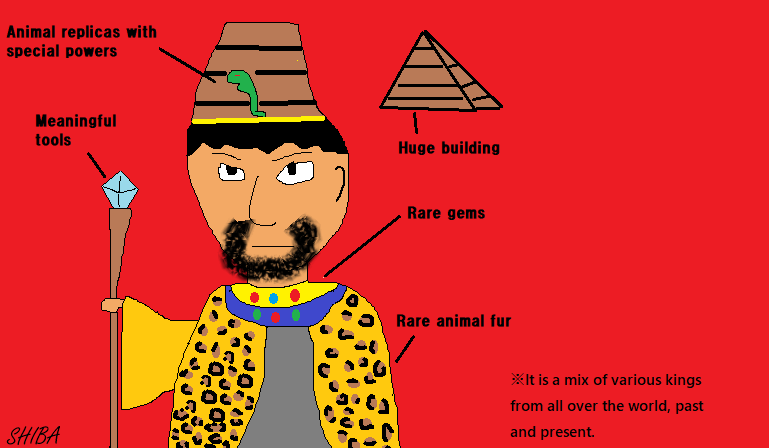
On the other hand, it became necessary to have people who could act as leaders, guiding many others. Leaders were increasingly regarded as special individuals more trustworthy than others, and eventually they “evolved” into roles such as village chiefs and, later, kings. Some even claimed that, as kings, they possessed special powers, and used this claim to command people. They would dress in ways befitting their status, such as wearing shining crowns and jewelry, and also made their power visible—having large monuments built, for example.
Thus, we can understand that modern civilization is deeply connected to agriculture. If we had continued with hunting and gathering, countries and cities as we know them today would probably not have formed, and issues such as territorial disputes and population explosions might not have become so serious.