Not only the pyramids! The charm of Egypt as told through history



What comes to your mind when you hear the word “Egypt”?
People may imagine many different things, but for many of us, perhaps this is the image that appears first:
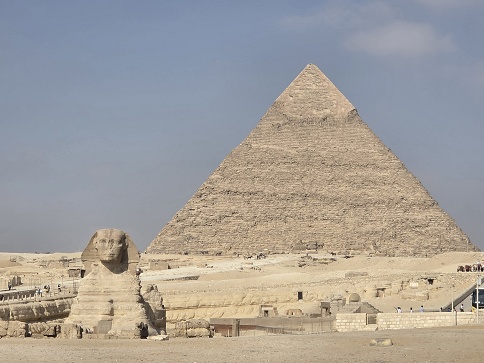
↑ taken in 2025
The pyramids are, of course, the symbol of Egypt.
However, I want to say this loud and clear —
Egypt’s charm is not limited to the pyramids!
So, let’s take a look at Egypt’s 5,000 years of history, focusing especially on the period after the pyramid age.
もくじ
Ideal for Agriculture – The World’s Longest River, the Nile
There is a saying: “Egypt is the gift of the Nile.” It means that Egypt’s continuous prosperity since ancient times has been entirely thanks to this river. The Nile flows from south to north across the African continent, stretching about 6,700 kilometers in total.
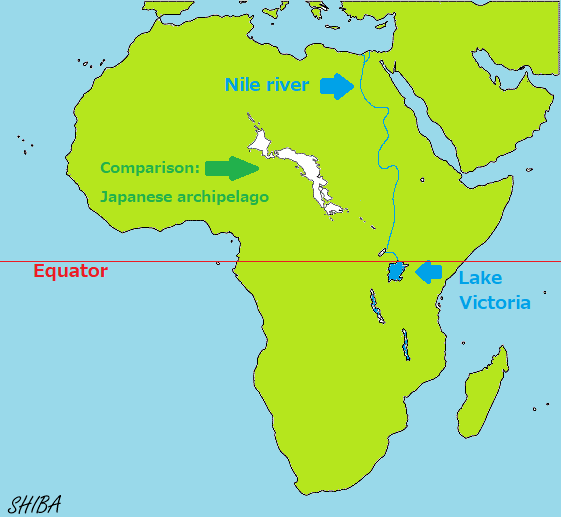
Its source is Lake Victoria, close to the equator. In other words, the Nile flows from the rainy tropical rainforest through savanna, steppe, and the Sahara Desert before finally reaching the Mediterranean Sea.
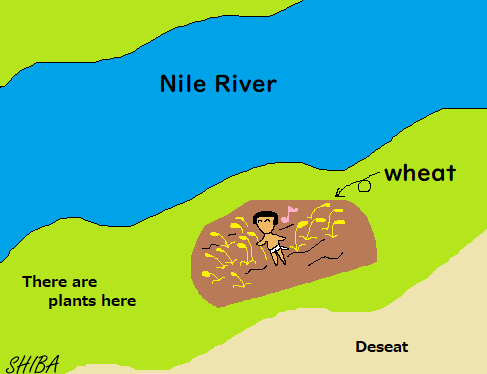
Because of this, even in the desert where rain cannot be expected, water was always available near the Nile, allowing agriculture to flourish since ancient times. Moreover, the river regularly flooded and brought fresh nutrients to the soil.
As a result, ancient Egyptians never suffered from “soil exhaustion.” It was this stable and abundant food supply that made it possible to build the enormous pyramids — structures said to be difficult to construct even with modern technology — more than 4,000 years ago.
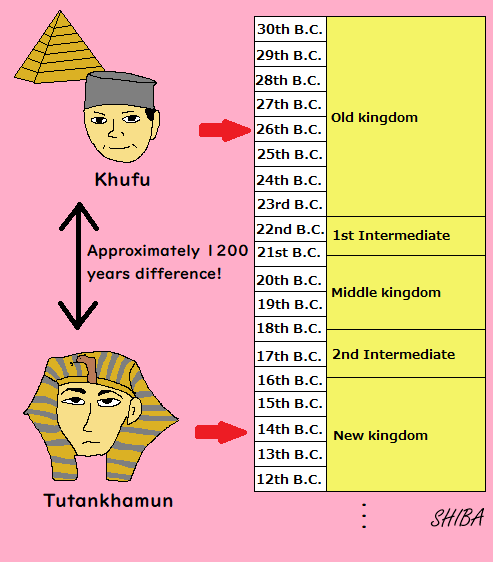
The period when pyramid construction was most active was around 2700–2500 BCE, known as the Old Kingdom. In contrast, the famous King Tutankhamun, who lived around 1400 BCE during the New Kingdom, had no pyramid of his own.
King Khufu, builder of the Great Pyramid, and Tutankhamun, the boy king with the golden mask, were both rulers of ancient Egypt — but over 1,000 years apart. That alone gives us a sense of how long Egyptian history really is.
Cleopatra’s Death and the Rise of Rome
Later, Egypt came into contact and conflict with Mesopotamian civilizations, fell under Assyrian rule in the 7th century BCE, the Persian Empire in the 6th century, and was conquered by Alexander the Great in the 4th century BCE. The city of Alexandria, named after him, was founded at this time.
After Alexander’s death, the Ptolemaic dynasty emerged as an independent kingdom, creating a unique culture that blended Greek and traditional Egyptian elements. Meanwhile, the Roman Empire rose to power around the Mediterranean, and Egypt could no longer ignore its growing influence.
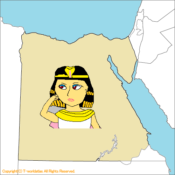
The (virtually) last ruler of the Ptolemaic dynasty was the famous Cleopatra VII. She is well known for captivating powerful Romans such as Julius Caesar and Mark Antony, but in the end, she lost her life after being defeated — or rather caught up in civil conflict — with Rome.
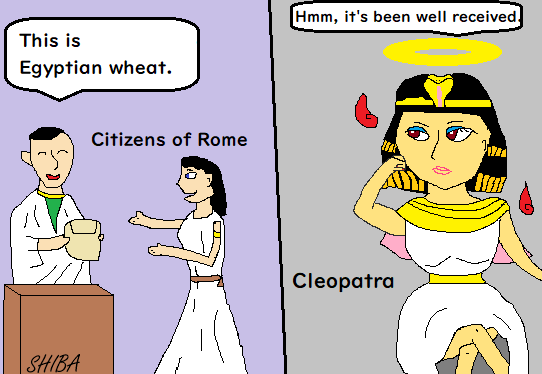
Egypt then became a province of the Roman Empire. Still, the fertile Nile Valley remained, and Egypt soon became Rome’s vital breadbasket, supplying massive amounts of grain. The phrase “bread and circuses,” used to describe how emperors kept their citizens content, owes much to Egypt’s grain production.
Islam and the City of Cairo
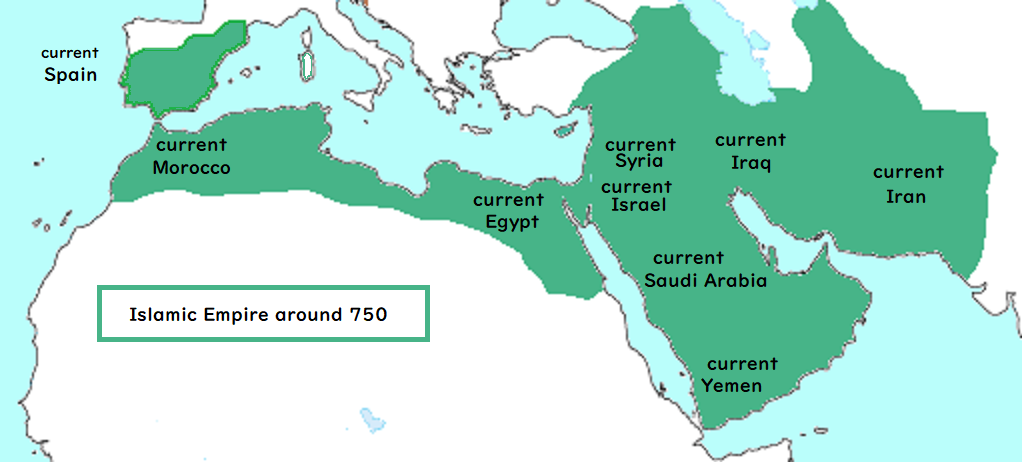
At the end of the 4th century, the Roman Empire divided, and Egypt became part of the Eastern Roman (Byzantine) Empire. Around the same time, Christianity spread, and Alexandria became one of the five major Christian patriarchates. However, in the 7th century, Muslim Arabs from the Arabian Peninsula expanded their territory and conquered Egypt in 642 CE.
To the Arabs, Egypt also appeared as a rich and attractive land. Many Arabs migrated there, and over time, locals intermarried with them, gradually adopting the Arabic language and the Islamic faith.
In this way, Egypt became a land where Arabs and Muslims formed the majority — a situation that continues today. Christianity became a minority religion, but even now about 10 percent of Egyptians are Christian.
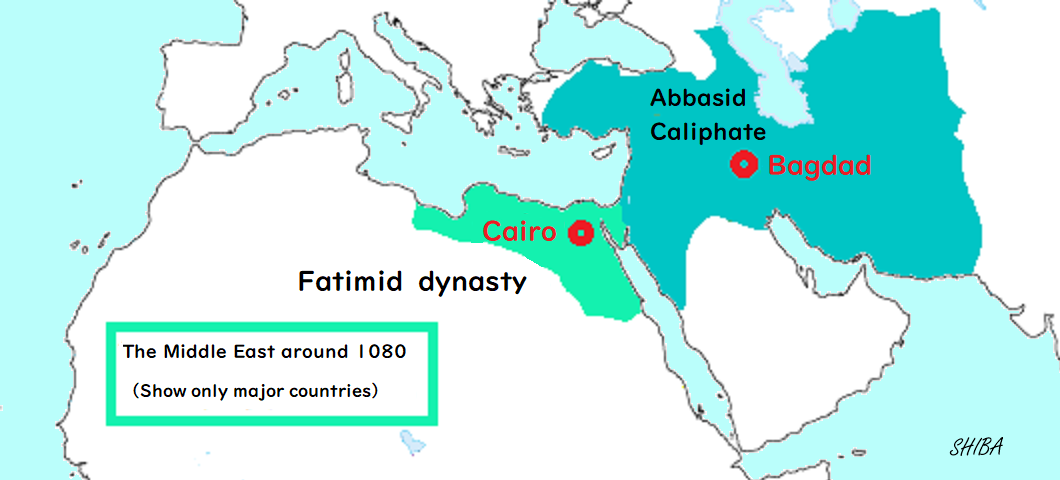
In the 9th century, the Islamic Abbasid Caliphate had its center in Baghdad, but regional independence began to appear. After a series of short-lived dynasties, Egypt came under the rule of the Fatimid Caliphate in the 10th century.
The Fatimids developed a new city called “Misr al-Qāhira”, meaning “the victorious military city.” The modern name “Cairo” comes from al-Qāhira. From then on, Cairo became the main center of Arab life in Egypt.
Even today, Arabs call Egypt “Misr”, meaning “military city,” which reflects how the land was once taken by conquest. The name “Egypt,” by contrast, comes from ancient Greek.
The Mamluks Who Defeated the Mongols
After the Fatimids, the Ayyubid dynasty was established in the 12th century. Its founder, Saladin, is famous for retaking Jerusalem from the European Crusaders.
In the mid-13th century, the Mamluk dynasty rose to power. The word “Mamluk” means “slave,” but they were soldiers bound by service — in essence, a kind of military government.
Shortly after the dynasty was founded (in 1250), the Mongol Empire invaded from the east. In 1258, Baghdad — the center of Arab civilization — was conquered and destroyed. The Mongol armies continued westward and finally clashed with the Mamluks in 1260.
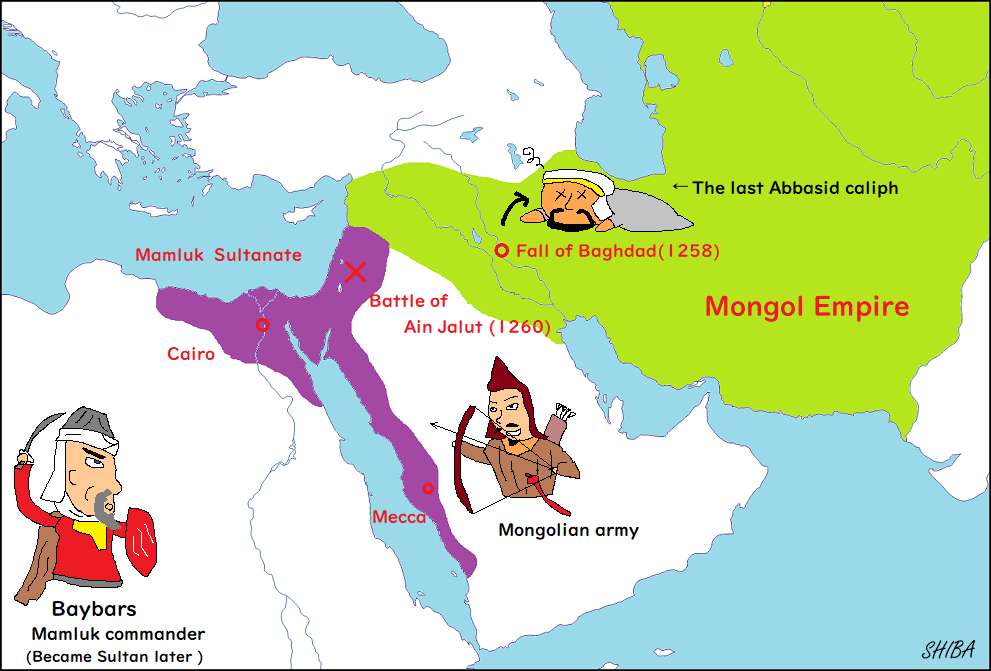
In the Battle of Ain Jalut, the Mamluks defeated the Mongols, stopping their advance into the Middle East.
Around the same time, many Arabs and Muslims fled to the Mamluk realm from places like Baghdad. Among them were great scholars and artists, and Cairo became the new cultural and intellectual center of the Arab world. Even today, Cairo remains the most populous Arab city, ahead of Dubai or Baghdad.
The Suez Canal That Changed World Trade
The Mamluk dynasty, however, could not resist the changing times. In the 16th century, it was conquered by the Ottoman Empire. Still, Cairo remained prosperous as the empire’s second city after Istanbul.
In the 19th century, Egypt effectively gained independence under Muhammad Ali, then the Ottoman governor. He sought to modernize Egypt by introducing technology and ideas from Europe.
At that time, Europe was expanding across the world through the Industrial Revolution and foreign trade, which made efficient transportation increasingly necessary.
As shown on the map, ships traveling from Europe to Asia had to go around the entire African continent. This inspired the idea of connecting the Mediterranean and Red Seas through a canal — the Suez Canal.
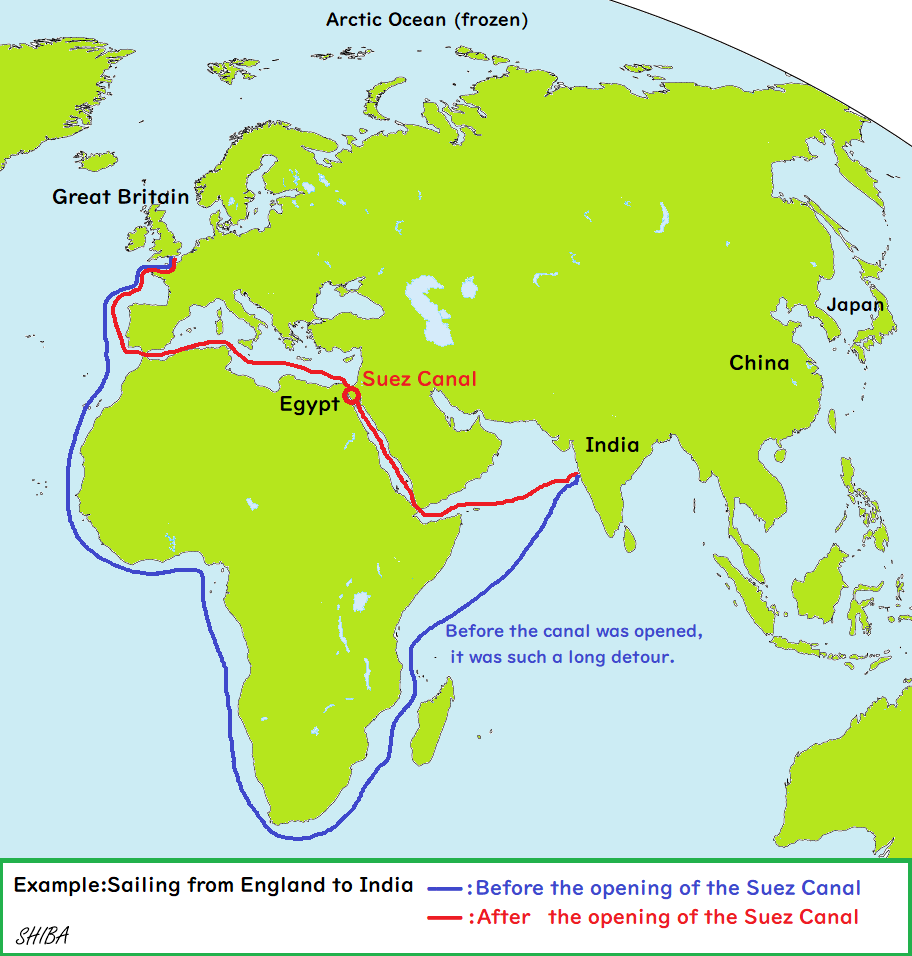
The construction project was led by French engineer Lesseps, and a large number of Egyptians worked under harsh conditions. At the cost of some 20,000 lives, the canal was completed in 1869, greatly shortening the sea route between Europe and Asia.
However, Egypt’s rapid modernization and unequal treaties with Western nations left it deeply in debt, forcing it to sell its canal shares to Britain. This “gold mine” canal became British property.
As a result, Egypt came under British economic — and later political — control, eventually becoming a protectorate until 1922. It was not until the 1950s that Egypt declared the nationalization of the Suez Canal and freed itself from dependence on Britain.
Nation of 100 Million Living in 90% Desert
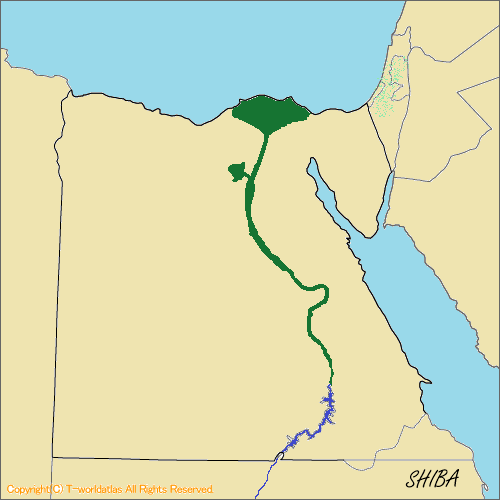
A look at Egypt on Google Maps shows that most of the country is yellow — desert. In fact, more than 90 percent of Egypt is desert land. Yet, with a population of over 100 million, it is the most populous Arab nation.
Because of this, Egypt’s actions have long influenced the entire Arab world, from the wars of the 20th century to the Arab Spring of 2011.
How can 100 million people live in such a desert country? The answer, once again, lies in the Nile River. A glance at satellite photos shows that only the areas along the Nile appear green.
Most Egyptians live along the river’s fertile banks. Cairo, the capital; Alexandria, the second-largest city; Giza, where the pyramids stand; and Aswan, home to the huge dam — all are located along the Nile or in the delta near its mouth. The “gift of the Nile” continues to this day.
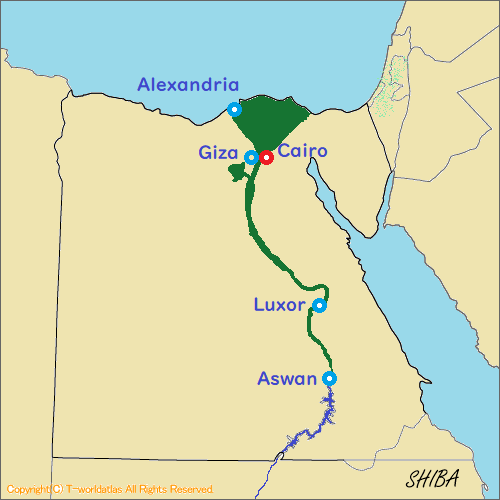
We have briefly covered Egypt’s 5,000 years of history. As we can see, many nations and peoples — ancient dynasties, Persians, Greeks, Romans, Arabs, and Western powers — have conquered this land, influencing it deeply and, in turn, being influenced by it.
To me, Egyptian society feels like a set of layers built around the Nile — overlapping cultures, religions, and peoples forming a kind of living geology. Not only the pyramids, but also Cairo’s mosques, Alexandria’s churches, and the Suez Canal are fragments visible from the surface of those layers. Each fragment tells a part of Egypt’s grand story — and together they represent the very essence of its appeal.