8th century Frank, the Great Buddha, Arabian Nights


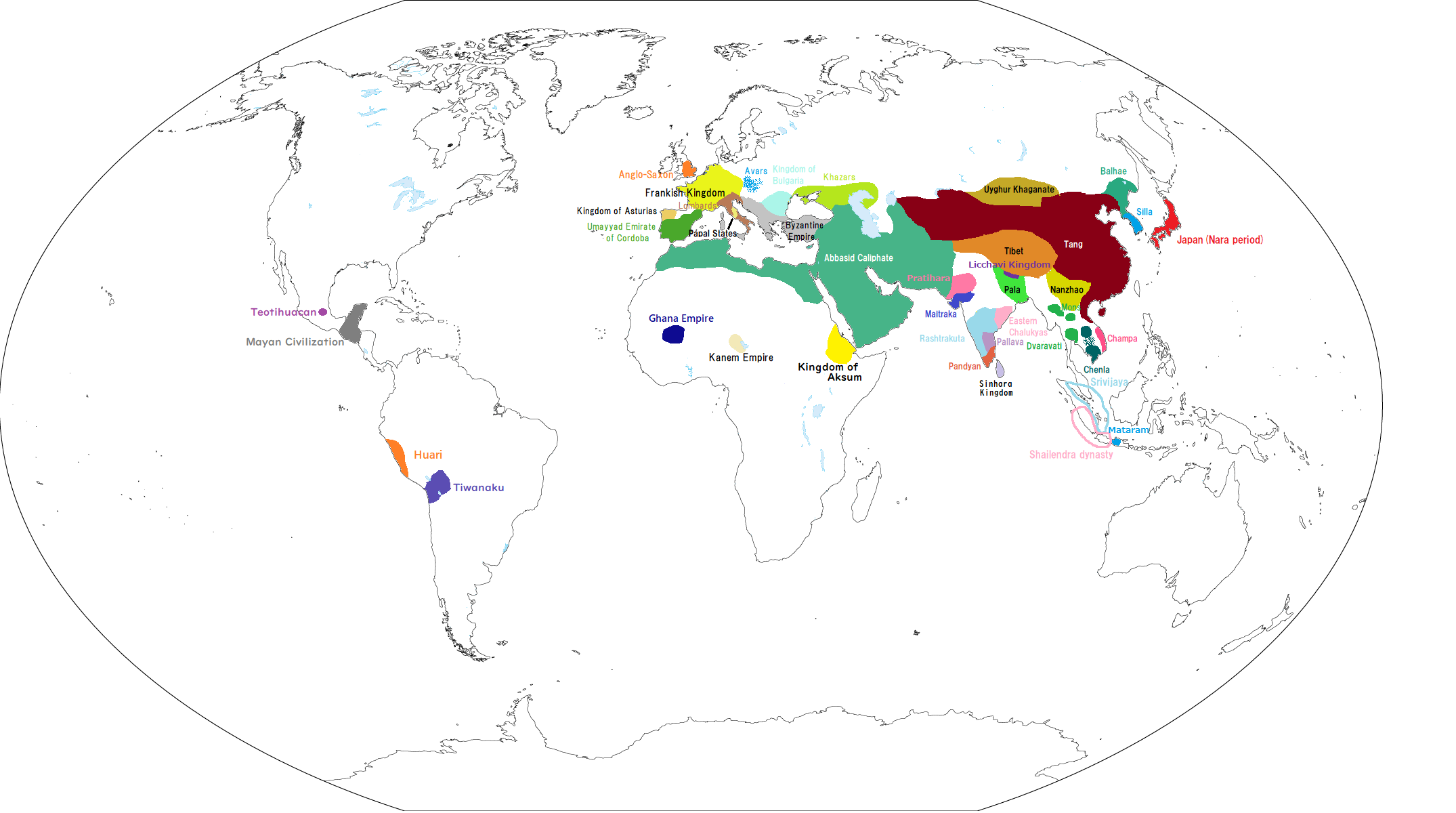
The Islamic faith, which emerged in the 7th century, spread further in the 8th century to regions surrounding Arabia, such as Central Asia and Spain. During this period, not only military conquests but also the expansion through trade became increasingly important. While Europe, after a long period of turmoil, began to show signs of unification, China (Tang dynasty), on the other hand, entered a period of instability from the mid-8th century onward
もくじ
Japan
In Japan, under Empress Jitō(持統天皇), the nation’s first full-fledged legal code, the Taihō Code(大宝律令), was completed in 701, establishing a government centered on the Yamato(大和) court. Fujiwara no Fuhito(藤原不比等), the son of Fujiwara no Kamatari(藤原鎌足), played a major role in drafting this document. Through the achievements of this father and son over two generations, the Fujiwara clan gradually gained power.
In 710, the capital was moved to Heijō-kyō (平城京Nara at present), marking the beginning of the Nara period(奈良時代). However, repeated outbreaks of epidemics and famines led people to seek salvation in Buddhism. In the mid-8th century, Emperor Shōmu(聖武天皇), who ruled at the time, ordered the monk Gyōki(行基) and others to construct the Great Buddha and invited the eminent Chinese monk Ganjin(鑑真) to Japan. As a result, the influence of Buddhist monks in Heijō-kyō grew so strong that it began to affect politics.
Emperor Kanmu(桓武天皇), who ascended the throne in 781, built Heian-kyō (平安京 Kyoto at present) in 794 and moved the capital once again. It is said that, at first, Heian-kyō had only the minimum number of temples.
During the Nara period, Japan’s oldest historical records, the “Kojiki(古事記)” and “Nihon Shoki(日本書紀)”, were compiled, and the “Man’yōshū(万葉集)”, a collection of Japanese poems from various eras, was also created. Famous buildings from this period include Tōdai-ji(東大寺), which houses the Great Buddha; Tōshōdai-ji(唐招提寺), built for Ganjin; and the Shōsōin(正倉院), which preserves the relics of Emperor Shōmu. This series of cultural achievements is referred to as Tenpyō culture(天平文化).
East Asia
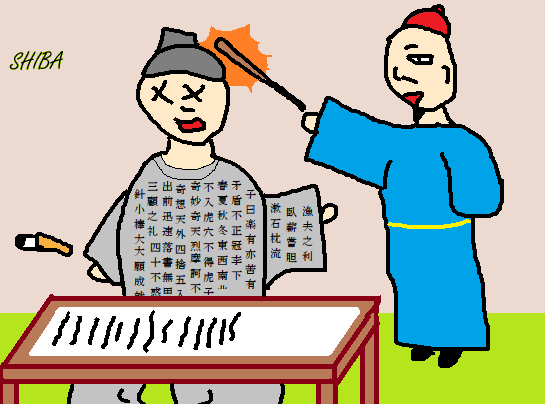
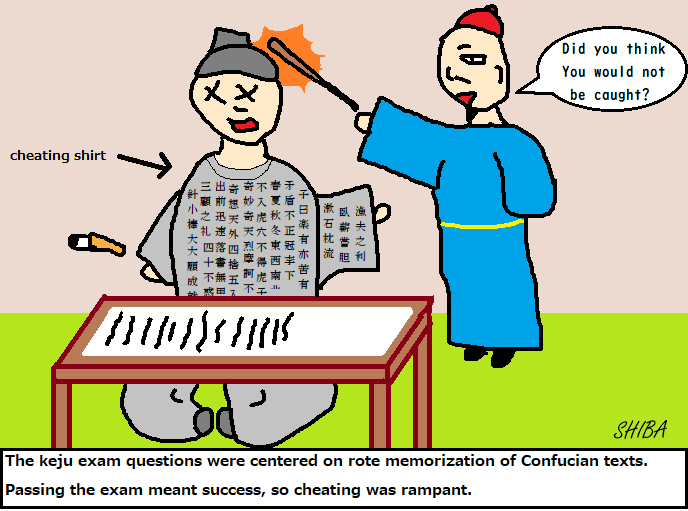
China was in the midst of the Tang(唐) dynasty at this time. In the early 8th century, Wu Zetian(武则天), the only female emperor in Chinese history, wielded great power. During her reign, the imperial examination system known as the keju(科挙), which had begun in the Sui (隋)dynasty, became firmly established; this system, though it underwent interruptions and reforms, continued until the Qing(清) dynasty.
From the early to mid-8th century, the sixth emperor, Xuanzong(玄宗), enjoyed a long reign, during which the Tang dynasty continued to flourish. He dispatched officials called jiedushi (节度使:regional military governors) to various parts of the vast empire to oversee and supervise local affairs. In military matters, the system shifted from the fubing(府兵) system, which required conscription of peasants, to the mubing(募兵) system, which recruited mercenary soldiers, thereby alleviating the burden on the peasantry.
Xuanzong was also supported by talented bureaucrats, among whom was Abe no Nakamaro(阿倍仲麻呂), who had come from Japan. This era under Xuanzong is known as the “Kaiyuan Reign(开元盛世),” named after the era name, and is celebrated for its prosperity. Culturally, it was a dazzling period, with the emergence of some of the greatest poets in Chinese history, such as Li Bai(李白) and Du Fu(杜甫).
However, in his later years, Emperor Xuanzong became infatuated with the beautiful consort Yang Guifei(杨贵妃) and lost interest in governing. At the center of power, Yang Guifei’s family (the Yang clan) behaved as they pleased, which led to discontent among regional military governors such as An Lushan(安祿山) and his subordinate Shi Siming(史思明), who eventually launched a rebellion. This was the An Lushan Rebellion(安史之亂). Driven from the capital Chang’an(长安) by this great upheaval, Xuanzong was forced to order Yang Guifei’s execution and ultimately abdicated the throne himself. This marked a turning point for the Tang dynasty.
Jiedushi who gained power were known as “fanzhen (藩镇)”. To counter these regional warlords, the Tang court was compelled to strengthen its finances, leading to the introduction of the Two-Tax Law (兩稅法) in 780. This system required peasants to pay taxes in currency based on the size of their landholdings, effectively recognizing private land ownership and dismantling the earlier public land and citizen system.
Meanwhile, on the Korean Peninsula, Silla(신라/新羅) reached its cultural peak, and during the reign of King Gyeongdeok(경덕왕/景德王) in the mid-8th century, construction began on Bulguksa(불국사/佛國寺), the peninsula’s largest Buddhist temple. On the other hand, Silla had a strict social hierarchy known as the bone rank system(골품제도/骨品制度), which imposed various restrictions not only on royal succession but also on bureaucratic positions and even marriage partners.
To the north, King Go/Dae Joyeong(고왕/대조영:高王/大祚榮), a survivor of Goguryeo(고구려/高句麗), founded the kingdom of Balhae(발해/渤海), which also established friendly relations with Japan.
In Tibet, there were ongoing conflicts with the Tang dynasty over control of trade routes in the Western Regions, such as the Silk Road. When the An Lushan Rebellion shook the Tang in 755, the Tibetan king at the time, Trisong Detsen, took advantage of the situation to temporarily occupy Dunhuang(敦煌) and other areas, expanding his territory. This allowed Tibet to gain an advantageous position in Silk Road trade. Buddhism was one of the major influences that spread widely along the Silk Road. Trisong Detsen also established Buddhism as the state religion of Tibet, and from this point, Tibetan Buddhism began to develop its own unique characteristics.
Similarly, a Tibetan royal lineage established the Kingdom of Nanzhao(南诏) around present-day Yunnan(云南) Province in China. By the mid-8th century, Nanzhao had become independent from both the Tang and Tibet, and even launched invasions into Tang-controlled Vietnam.
South Asia
It appears that India during this period was in a state of chaos. This was because Indian culture and society, which had developed along the Ganges River, began to take root in the surrounding arid regions and among nomadic societies, giving rise to new dynasties.
In northern India, the Pratihara dynasty, founded by the nomadic Gurjara people in the mid-8th century, expanded its influence. In the Bengal region of eastern India, the Pala dynasty was established, becoming the last Indian dynasty to strongly support Buddhism. In southern India, on the Deccan Plateau, the Rashtrakuta dynasty, which had defeated the Chalukya dynasty in 752, expanded its power. These three dynasties engaged in a three-way struggle for supremacy.
South East Asia
In the Indochina Peninsula, the state of Chenla in Cambodia expanded its territory. Like the earlier kingdom of Funan in the same region, Chenla gradually strengthened its economic ties with China and India, gaining wealth and prosperity through these connections. However, there were multiple trade routes linking Cambodia and China (the Tang dynasty). The main ones were an inland route utilizing lakes and rivers, and a route leading out to the South China Sea. As a result, Chenla eventually split into factions that prioritized each route. The group favoring the inland route was called Land Chenla, while the group favoring the maritime route was called Water Chenla, and each competed to promote themselves to the major powers. Amidst this situation, the region that was able to control both the land and water routes gradually grew in importance-this was the Angkor area.
On Java in Indonesia, powerful royal families also emerged around this time. One was the Sanjaya dynasty, founded by King Sanjaya who ascended the throne in the early 8th century. With its capital at Mataram in central Java (present-day Yogyakarta), it is known as the Old Mataram Kingdom (the term “Old” distinguishes it from the later Islamic Mataram Sultanate). Much about the early kingdom remains unclear, but it is believed to have followed Hinduism.
Another was the Sailendra dynasty, which brought the Old Mataram Kingdom under its control in the mid-8th century. The Sailendra dynasty revered Buddhism and built temples throughout the region. In the late 8th century, it even conquered Srivijaya, which flourished on both sides of the Strait of Malacca, and established a major presence in the maritime regions of Southeast Asia.
West Asia /Central Asia
Under the Umayyad Caliphate, Islam continued to spread to surrounding regions. To the east, it reached as far as present-day Kyrgyzstan via Central Asia and the Silk Road. During the same period, the Tang dynasty of China was also expanding its influence from the east. In 751, the armies of the Tang and the Islamic world clashed at the Battle of Talas. It is said that Chinese prisoners captured in this battle brought papermaking technology to the Middle East.
To the west, after conquering North Africa all the way to Morocco, the Umayyads crossed the Strait of Gibraltar and came to rule the Iberian Peninsula destroying Visigothic Kingdom in 711. However, the Umayyad dynasty showed favoritism towards themselves (the Arabs) and created a society that discriminated against the original inhabitants such as the Persians, who were known as “Mawali” (non-Arab converts to Islam). As the empire expanded, the Mawali population and their discontent grew. In 750, with the support of the Mawali, the Abbasid family overthrew the Umayyads.
The second Abbasid Caliph Mansur built a new capital in a location that allowed access to both the Silk Road trade routes and the Tigris River-this was Baghdad, which is now the capital of Iraq. From then on, Baghdad became the political and economic center of the Islamic world.
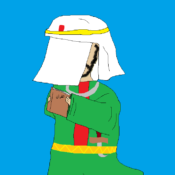
Harun al-Rashid, the fifth Caliph who emerged in the late 8th century, employed talented bureaucrats and scholars regardless of Arab or non-Arab descent, leading the Abbasid Caliphate to its golden age during this period. The Arabian Nights, compiled in later centuries, depicts the vibrant society of that era, with some episodes featuring Harun al-Rashid himself.
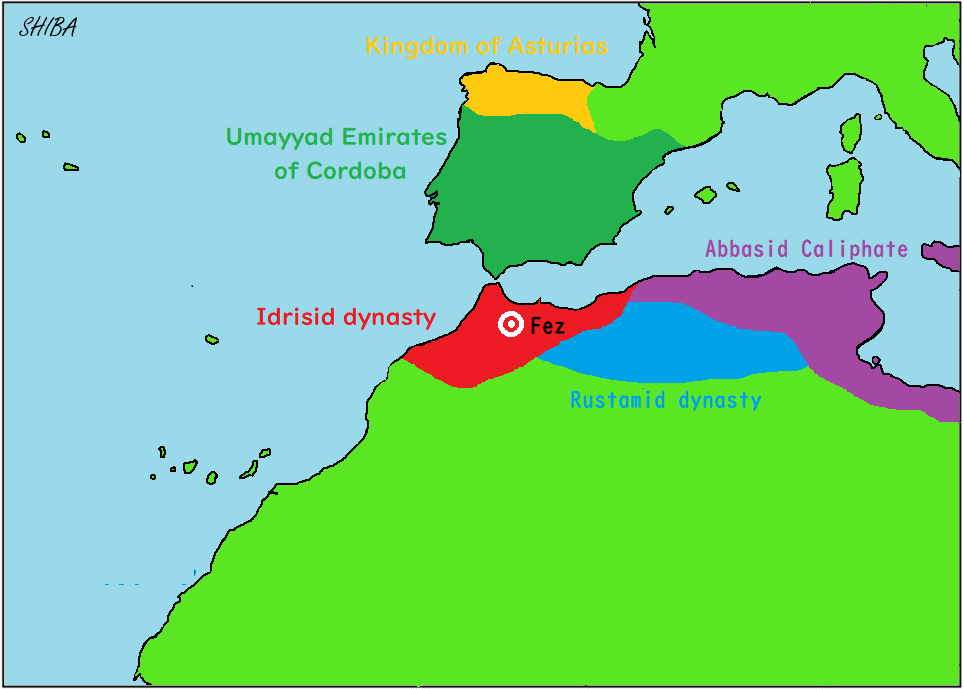
However, in regions far from Baghdad, movements for independence from the central government began to emerge. After the Abbasids came to power in 750, Abd al-Rahman, a surviving member of the Umayyad family, fled to the Iberian Peninsula and in 756 established a new Umayyad dynasty centered in Córdoba, in what is now southern Spain. This is generally known as the “Later Umayyad Caliphate” or the “Umayyad Caliphate of Córdoba.”
Similarly, in Morocco, Idris, who had failed in a rebellion in Mecca in 776, fled and established the Idrisid dynasty in 789, which followed the Ibadi sect in opposition to the Sunni Abbasids. In present-day Algeria, the Ibadi Rustamid dynasty was also established.
East Europe
As the expansion of Islam continued, the Byzantine Empire repeatedly faced existential threats. However, the massive walls of the capital, Constantinople, along with the secret weapon known as “Greek fire,” prevented the Muslim armies from invading, and by the reign of Leo III in the early 8th century, the empire had overcome this crisis.
As for Leo III, perhaps influenced by Islam’s prohibition of idolatry (the worship of images of deities), or perhaps in opposition to the Catholic Church in Western Europe, he criticized the use of “icons,” which had been used to spread Christianity, and went so far as to ban them.
Icons, which depicted Jesus Christ or the Virgin Mary, were invaluable for spreading the faith among people who could not read or understand Latin scripture. However, since Christianity, like Judaism and Islam, originally forbade idolatry, Leo III considered the use of icons to fall under this prohibition too.
His successor, Emperor Constantine V, intensified the destruction of icons and religious images, and especially persecuted monks, who were major supporters of icon veneration. As a result, the traditional skills of creating statues and paintings that had continued since ancient times in Greece under Byzantine rule declined significantly. Such harsh measures were widely criticized both inside and outside the empire, and this emperor was later given the derisive nickname “the Dung Emperor” by posterity.
West Europe
Significant changes also occurred in Europe, which had long been in a dark age. The Umayyad forces that conquered the Iberian Peninsula advanced further, crossing the Pyrenees and reaching what is now southern France. Standing in their way was the Frankish Kingdom. The Frankish mayor of the palace, Charles Martel, defeated the Islamic army at the Battle of Tours and Poitiers, earning the trust of the Pope.
The Frankish Kingdom also promoted the spread of Christianity and strengthened its relationship with the papacy. Charles Martel’s son, Pepin, seized the throne from the Merovingians in 751, founding the Carolingian dynasty. At that time, he presented part of northern Italy (the region of Ravenna), which he had taken, to the Pope-an act known as the Donation of Pepin. In return, the Pope recognized Pepin’s kingship.
Pepin’s son, Charles I (Charlemagne), spent much of his life in military campaigns, conquering the Lombard Kingdom of northern Italy in 774 and subduing the Saxons, a Germanic people in northern Germany. He also launched invasions against the Umayyads in the Iberian Peninsula, but was defeated; this episode was later immortalized in the epic poem “The Song of Roland.” Nevertheless, the Mediterranean city of Barcelona came under Frankish control.
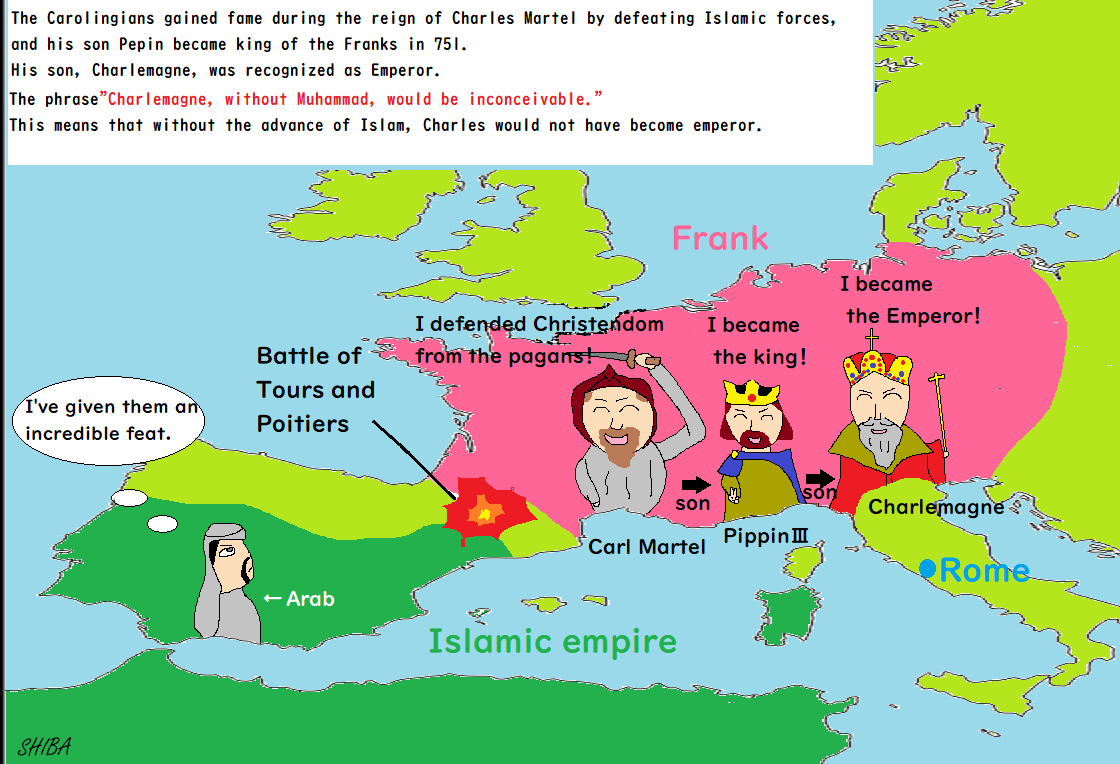
In recognition of his achievements, Charles I was crowned “Emperor of the Romans” by Pope Leo III on Christmas Day in the year 800. This coronation marked a shift in the center of gravity of Europe from southern to western Europe.
In this unstable era of conflict among various peoples, ordinary people who wanted to protect their land entrusted it to local nobles or other powerful figures with military strength, seeking their protection. The powerful figures (lords) accepted the land and, in turn, made contracts to lease it back to the original owners (vassals), allowing them to continue cultivating it as before. However, under these contracts, the lord assumed the obligation to protect the land, while the vassal was required to support the lord. In this way, lords entered into successive agreements and expanded their own estates (manors).It is thought that this kind of feudal system began to appear in Europe around this time.
America
The Maya civilization flourished on the Yucatán Peninsula. One of its representative cities was Tikal, located in present-day Guatemala. Tikal, after suffering a decline due to attacks from its rival city Calakmul, regained its strength and achieved a revival and revenge against Calakmul under the rule of Jasaw Chan Kʼawiil I in the early 8th century. By the mid-8th century, Tikal had become the largest city in the Maya world.
In South America, the Nazca culture, known for its massive geoglyphs in southern present-day Peru, is believed to have declined around the 8th century, along with the Moche culture in the north. Replacing them, the Wari Empire expanded its influence from the Andes. Although details remain unclear, the Wari Empire is thought to have had deep cultural and social ties with Tiwanaku, a civilization centered around Lake Titicaca, and the two shared many similarities.
Event
701 Completion of the Taihō Code (Japan)
710 Capital moved to Heijō-kyō; beginning of the Nara period (Japan)
711 Fall of the Visigothic Kingdom; the Iberian Peninsula comes under the Umayyad Caliphate (Southern Europe)
712 Xuanzong ascends the throne in Tang China (China)
Early 8th century Kingdom of Ghana established in the Sahara region (Africa)
726 Leo III of the Byzantine Empire issues the Iconoclasm Edict (Eastern Europe)
732 Battle of Tours (Poitiers); the Frankish Kingdom halts the expansion of Islam (Western Europe)
750 Establishment of the Abbasid Caliphate; the Umayyad family is overthrown and flees to Iberia (West Asia)
Mid-8th century The Shailendra dynasty gains control of Java (Southeast Asia)
Mid-8th century Kingdom of Kanem established around Lake Chad (Africa)
751 Battle of Talas; Tang China clashes with the Islamic forces (Central Asia)
751 Construction of Bulguksa begins in Gyeongju, capital of Silla (Korean Peninsula)
751 Pepin III of the Carolingian dynasty becomes king of the Frankish Kingdom (Western Europe)
752 Completion of the Great Buddha of Nara (Japan)
754 Jianzhen (Ganjin) arrives in Japan (Japan)
755–763 An Lushan Rebellion (China)
756 Establishment of the Emirate of Córdoba in the Iberian Peninsula (Southern Europe)
774 Charlemagne (Charles I) of the Frankish Kingdom destroys the Lombard Kingdom in northern Italy (Western Europe)
786 Harun al-Rashid ascends the throne of the Abbasid Caliphate (West Asia)
793 Norsemen raid Ireland; beginning of Viking activity (Northern Europe)
794 Capital moved to Heian-kyō; beginning of the Heian period (Japan)
800 Charlemagne crowned as the successor to Rome; formation of the Carolingian Empire (Western Europe)