7th century The Birth of Islam and the Prosperity of the Tang Dynasty



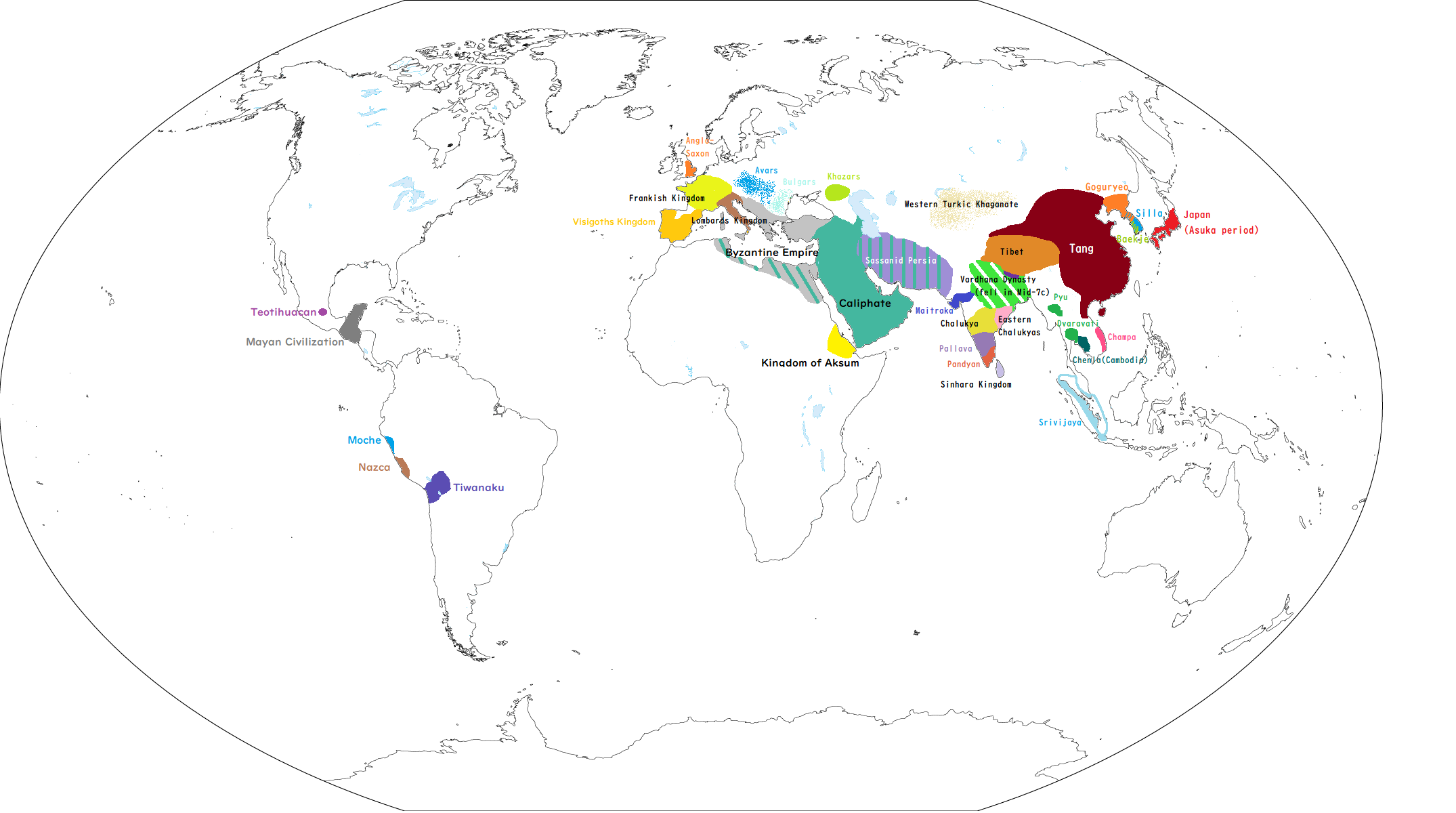
The 7th century was a period of significant transformation. In China, the Tang dynasty was established, exerting a profound influence on the East Asian world. In Japan, the Taika Reform began, laying the foundation for a centralized state centered around the emperor. However, the most remarkable change was the birth of Islam in West Asia.
West Asia
In West Asia, the Byzantine Empire dominated the western region while the Sasanian Persian Empire controlled the eastern side. These two powers repeatedly clashed in wars over supremacy. By the early 7th century, both empires had become exhausted, creating a power vacuum in West Asia. It was around this time, in the religious city of Mecca on the Arabian Peninsula, a merchant named Muhammad had received “divine revelations” and founded Islam, approximately in 610.
After this, Muhammad and his followers, who were persecuted in Mecca, fled to Medina, which was located north of Mecca, and established the “Ummah” (Islamic community). This event is called the “Hijra” (migration). The year 622 CE, when the Hijra took place, became the first year of the Islamic calendar. Muhammad, who gained fame in Medina, successfully conquered Mecca in 630. He destroyed the idols in the Kaaba and established it as an Islamic holy site.
The Arabs, who lived a nomadic life in the desert, heard of this achievement and formed a master-servant relationship with Muhammad. However, after Muhammad passed away in 632, many left the Ummah, claiming that their contract had ended. The caliphs (Islamic leaders) who succeeded Muhammad sought to prevent this by launching conquests into lands richer than the Arabian Peninsula.
Even from this era’s perspective, Mesopotamia (Iraq), Syria, and Egypt, which had built civilizations for over 3,000 years, were more attractive lands than the desert-covered Arabia. In the 630s, Arab warriors on camels eagerly invaded these regions. On the eastern front, they defeated the weakened Sassanid Empire in the Battle of Nihavand in 642, conquering the Mesopotamian region. The Sassanid Empire, having lost its capital and in disarray, fell in 651. On the western front, they seized Syria, Palestine, and Egypt from Byzantine control by the mid-7th century, and many Arabs migrated to these areas.
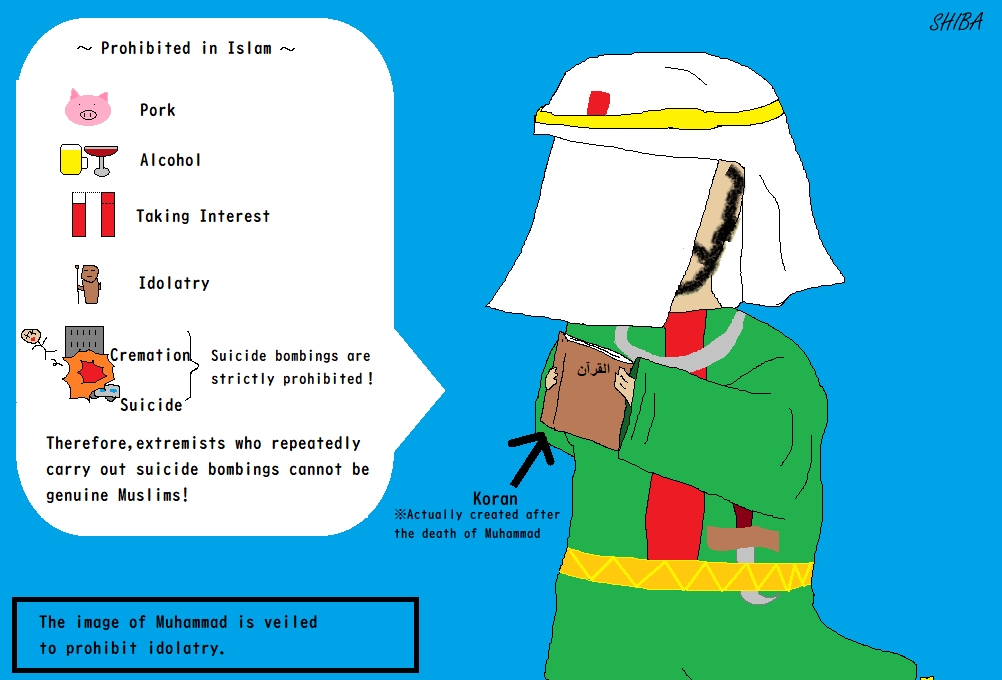
Around the same time, Muhammad’s teachings were compiled into a holy book. This became the “Quran”. As the Quran was written in Arabic, along with Islam, the Arabic language also spread to Iraq and Egypt.
In the latter half of the 7th century, conflicts over power and policies intensified within the Islamic community. The most significant of these was the confrontation between Ali, who became the fourth Caliph, and Muawiyah of the Umayyad family, who was based in Syria (First Fitna). In 660, Muawiyah declared himself Caliph in Damascus (the current capital of Syria) and established the Umayyad dynasty.
Ali, who was at a disadvantage in the subsequent battles, was assassinated in 661. At this point, Muslims split into two groups: those who supported the Umayyad Caliphs and those who considered Ali and his successors as the legitimate Caliphs. This event led to the formation of the two major sects that continue to exist today: “Sunni” and “Shia”.
In the 680s following Muawiya’s death, uprisings against the Umayyad dynasty—the Second Civil War—broke out in places like present-day Iraq and Mecca, triggered by revolts among Shiite Muslims. The fifth caliph, Abd al-Malik, suppressed these rebellions by 692 and unified the dynasty’s internal administration by standardizing official documents, previously written in Persian or Greek, into Arabic. As a result, Arabic became widely used throughout Umayyad society.
East Asia
In the early 7th century, China was under the Sui(隋) Dynasty. In Japan, Prince Shotoku(聖徳太子), who had allied with the Soga(蘇我) clan, dispatched Ono no Imoko(小野妹子) to China. He had an audience with Emperor Yang(炀帝), the ruler of Sui at that time. The famous episode relates to the letter presented during this meeting, which read: ‘The Son of Heaven where the sun rises sends greetings to the Son of Heaven where the sun sets.’ (meaning: The ‘Emperor’ of the rising eastern country, growing like the rising sun, sends greetings to the Emperor of the western country, which is recently in decline.) This message angered Emperor Yang.
However, in reality, Emperor Yang lost support by imposing heavy burdens on the people during the construction of the Grand Canal connecting the Yangtze and Yellow Rivers, and failing in his attack on Goguryeo(고구려/高句麗) on the Korean Peninsula. In 618, overworked farmers rebelled, leading to the fall of the Sui dynasty, and the Tang(唐) dynasty was established by Li Yuan(李渊) and his son Li Shimin(李世民). The second emperor, Li Shimin (Emperor Taizong:太宗), is regarded as a wise ruler who had excellent advisors and established a bureaucratic system that would influence later Chinese dynasties. His reign is known as the ‘Zhenguan Era(贞观之治).’ The Tang dynasty would continue for nearly 300 years.
Returning the topic to Japan, Prince Shotoku was also active domestically. He is particularly famous for the ‘Twelve Level Cap and Rank System,(冠位十二階)’ which made the hierarchy of ranks more comprehensible, and the ‘Seventeen-Article Constitution(十七条の憲法),’ which outlined the principles for a peaceful society. As a devout Buddhist, he built Horyuji Temple(法隆寺) in his later years, which is renowned as the world’s oldest existing wooden structure.
Prince Shotoku passed away in 622, and his patron Empress Suiko(推古天皇) also died in 628. Subsequently, the Soga clan regained power, and Prince Naka no Oe(中大兄皇子), a member of the imperial family who sensed a crisis for the imperial household, along with his subordinate Nakatomi no Kamatari(中臣鎌足), overthrew them in a coup in 645. After that, the construction of a nation centered around the imperial family began, a process known as the Taika Reform(大化の改新).
The Tang Dynasty’s systems were heavily incorporated into this nation-building effort, and missions to Tang China, known as “Kentoshi(遣唐使)”, were frequently dispatched to study these systems. Local influential leaders were placed under the emperor’s authority, their lands confiscated, and they were positioned as government officials receiving salaries from the court (as part of the Handen-Shūju Law:班田収授法). Additionally, Nakatomi no Kamatari, who supported Prince Naka no Oe (later Emperor Tenji:天智天皇) during these reforms, was granted the surname ‘Fujiwara(藤原)’ in his later years, laying the foundation for the prosperity of the clan.
During this period on the Korean Peninsula, The Three Kingdoms period came to an end. In Goguryeo(고구려/高句麗), which had repelled attacks from the Sui dynasty, the emergence of the Tang dynasty posed a new challenge. As a result, in 642, Yeon Gaesomun(연개소문/淵蓋蘇文) staged a coup and became the de facto ruler, establishing a dictatorship. Silla(신라/新羅) strengthened its relationship with Tang China. With the help of talented military leaders from the Hwarang(화랑/花郎) such as Kim Yu-shin( 김유신/金庾信), Silla finally defeated Baekje(백제/百濟) in 660.
The Baekje forces, which had fled to their ally Japan, attempted to make a comeback. They fought alongside the Japanese army against the Silla-Tang alliance but were defeated in the Battle of Baekgang(백강/白村江) in 663, crushing their dreams of reviving Baekje. Under King Munmu(문무왕/文武王)’s reign, Silla conquered the remaining Goguryeo (Yeon Gaesomun has already passed away) in 668, unifying the Korean Peninsula for the first time in history.
In the same year of 668, Emperor Tenji passed away in Japan, leading to a power struggle between his brother and son. In 672, his brother emerged victorious in the Jinshin War(壬申の乱) and ascended to the throne as Emperor Tenmu(天武). It is believed that the country name ‘Nippon(日本:Japan)’ and the title ‘Tenno(天皇:Emperor of Japan)’ came into actual use during his reign.
As Japan and Silla entered a new phase, but both countries could not ignore the presence of the mighty Tang dynasty. Traumatized by the Battle of Baekgang, Japan was compelled to strengthen the defenses of northern Kyushu(九州) island, which was close to the continent. This led to the establishment of the sakimori(防人:border guards system), which was fully implemented from the 8th century onwards. However, this became a heavy burden for the farmers who were conscripted as soldiers.
In Silla, conflict arose when Tang attempted to dominate the newly unified Korean Peninsula. Although Silla managed to repel the Tang forces, to prevent further deterioration of relations, they began sending tributes to Tang as a vassal state. This system is known as the ‘Tributary system(册封体制)’.
Tang established similar relationships with countries in Southeast Asia and Central Asia, becoming the dominant power in East Asia. The ‘Duhufu’ (都护府/Protectorate Generals) were institutions that acted as supervisors and trade hubs in these distant lands far from the Tang capital of Chang’an(长安). For example, the Annam-Duhufu(安南都护府), which kept watch over the regions south of China, was established in present-day Vietnam.
With the emergence of the powerful Tang dynasty, trade along the Silk Road became even more prosperous. The Sogdians, who played a key role in this exchange, were active in Tang China as “Hu people”, and some even rose to the rank of high-ranking officials. During this period, religions such as Zoroastrianism were also introduced to China from the West.
South East Asia, South Asia, Tibet
In India, a fragmented state persisted, but the Vardhana Dynasty, led by King Harsha, grew powerful and unified North India in the first half of the 7th century. The Chinese Buddhist monk Xuanzang(玄奘) was welcomed by this king. Xuanzang’s record of his journey to India for training later became the basis for “Journey to the West(西遊記)”. In the latter half of the 7th century, another Chinese Buddhist monk, Yijing(義浄), visited India for training. However, by the time he arrived, King Harsha had already passed away and the Vardhana Dynasty had collapsed.
During the time when Xuanzang and Yijing came to India, Buddhism was already in decline, and Hinduism was taking root in society instead. In India, Buddhism was mainly revered by the Kshatriya (nobility) class, while Hinduism was popular among the majority of the common people. Particularly in South India (where the Chalukya and Pallava dynasties were flourishing at the time), the “Bhakti movement,” which sought salvation through complete devotion to Hindu deities, became prevalent. This movement gradually spread to North India over time.
In Tibet, the first half of the 7th century, the Tibetan Empire grew under King Songtsen Gampo. He established marital ties with Emperor Taizong(太宗) of the Tang(唐) Dynasty and Amshuverma, the ruler of Nepal, absorbing Chinese and Indian cultures.

The Licchavi dynasty of Nepal, ruled by Amshuverma, flourished as an intermediary between India and Tibet, leading to the blossoming of Buddhist and Hindu cultures. This marked the peak of the Licchavi dynasty.
In Southeast Asia, which developed through the Maritime Silk Road, numerous port city-states emerged. Particularly in the Strait of Malacca, cities on both sides of the strait united to form larger nations, Srivijaya; spanning across present-day Malay Peninsula and Sumatra Island, created a unified world despite being separated by sea. The aforementioned Yijing also visited Palembang, the capital of Srivijaya, on both his outward and return journeys.
In the Indochina Peninsula, Funan, which had previously handled intermediary trade between China and India, declined. In its place, the Khmer kingdom, known as the Cambodian kingdom, rose to prominence. This country was referred to as “Chenla(真臘/真腊)” in Chinese (Tang dynasty) documents of the time.
Europe
In Central and Eastern Europe, the invasion of the nomadic Avars intensified, compounding the conflicts among Germanic tribes. The Avars built a vast empire in the European interior. Slavic people followed in their wake, becoming the majority in present-day Poland, Czech Republic, and Serbia. The nomadic Bulgars, who arrived in the late 7th century, adopted Slavic culture and later established the powerful Bulgarian Kingdom in the Balkans.
The Avars briefly besieged Constantinople, the capital of the Byzantine Empire, but were repelled by Emperor Heraclius. He fought against the Avars in the north and the Sassanids in the south. After reclaiming Syria from the Sassanids in the 630s, he soon lost it to the emerging Islamic forces.
In Western Europe, the Merovingian Frankish Kingdom was the largest state. However, due to the Frankish custom of equally dividing inheritance among sons, the kingdom repeatedly fragmented and reunified. In northern Italy, the Germanic Lombard Kingdom expanded, threatening the Roman Pope and the Byzantine Empire.
The Iberian Peninsula was under the Germanic Visigothic Kingdom. However, most inhabitants were Latin people from the Roman era. For a long time, separate laws applied to the Germanic ruling class and the local Latin population. In 654, King Recceswinth issued the Visigothic Code, which applied the same laws to both groups, reflecting the diminishing differences between them. However, the Visigothic Kingdom’s fate was soon to run out. Islamic forces approached the Iberian Peninsula by the end of the 7th century.
Event
604 Prince Shōtoku establishes the Seventeen-Article Constitution (Japan)
607 Ono no Imoko is dispatched to Emperor Yang of Sui (Japan/China)
Around 610 Muhammad founds Islam (West Asia)
612 Harsha of the Vardhana dynasty unifies North India (India)
618 Sui dynasty falls, Tang dynasty established (China)
622 Muhammad flees to Medina due to increased persecution in Mecca (Hijra) (West Asia)
626 Emperor Taizong ascends the throne in Tang China.
629 Xuanzang departs Chang’an for India (Asia)
629 Songtsen Gampo ascends the throne in Tibet
630 Muhammad conquers Mecca. Arabian tribes submit to him (West Asia)
632 Muhammad past away (West Asia)
642 Muslims defeat the Sassanid Empire at the Battle of Nihavand (West Asia)
642 Yeon Gaesomun seizes power in Goguryeo (Korea)
645 Taika Reform begins (Japan)
651 Fall of the Sassanid Empire (West Asia)
660 Silla destroys Baekje (Korea)
661 Muawiyah establishes the Umayyad Caliphate (West Asia)
663 Battle of Baekgang – Silla-Tang allied forces defeat Japanese-Baekje forces (East Asia)
672 Jinshin War – Emperor Tenmu ascends the throne (Japan)
676 King Munmu of Silla unifies the Korean Peninsula (Korea)
681 Asparuh establishes the First Bulgarian Empire (Eastern Europe)
683 Second Civil War(West Asia)~692