Why does not Seoul have the notation of Chinese character?
もくじ
Ancient Korea
Around 2th century BC, there was a dynasty centered on the northern part of the Korean Peninsula near China was established. This dynasty is called “Gojoseon (고조선/古朝鮮)” means “Old Korea”. Gojoseon was conquered by the Han(漢) dynasty of China. But around the 1st century BC, some people rebelled against Han’s rule and established a new kingdom called “Goguryeo(고구려/高句麗)”. In the 4th century after the fall of the Han dynasty, Goguryeo expelled the remaining Chinese forces from the peninsula and became a great power. On the other hand, in the south of the Korean peninsula, there lived a people called the Han(한/韓) people, and two kingdoms emerged from them around the 4th century, “Baekje(백제/百濟)” and “Silla(신라/新羅)”. Baekje is also known as the kingdom that introduced Buddhism to Japan later day. And the its first capital was “Hanseong(한성/漢城)”, present days Seoul. After 4th century, the Three Kingdoms (Goguryeo, Baekje, and Silla) continued struggle with each other on the Korean Peninsula. During that, Hanseong was captured by Goguryeo in the 5th century, regained by Baekje in the 6th century, and then immediately seized by Silla, and the rulers changed rapidly.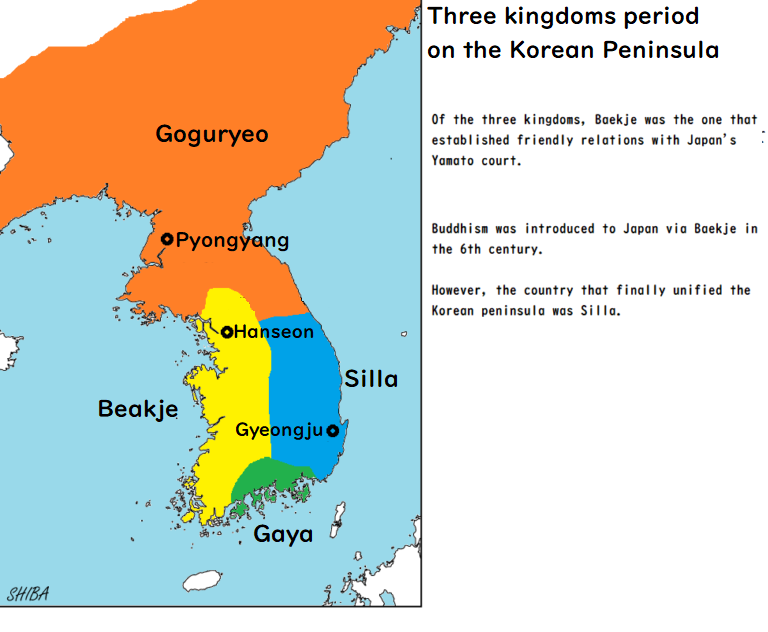
Is the rule of Silla and Goryeo
In the 7th century, Silla succeeded to unify the three kingdoms. The capital of Silla was located in Gyeongju (경주/慶州; famous for being the location of the World Heritage Site Bulguksa Temple), and Hanseong was renamed “Hanyang(한양/漢陽)” around this time. The man who defeated Silla in the 10th century was Wang Geon(왕건/王建), and with the meaning of rebuilding “Goguryeo(고구려/高句麗)”, he built a country called “Goryeo(고려/高麗)”. The capital of Goryeo was located in Kaesong (개성/開城;the second largest city in North Korea at present), but Hanyang also played an important role as the viceroyal capital. Therefore, the city was also called “Namgyeong(남경/南京;means southern capital)” during the Goryeo period. In the 13th century Goryeo was attacked by the Mongol Empire, but the royal family resisted by fleeing to Ganghwa Island(강화도/江華島) off the coast of Kaesong for several years before surrendering.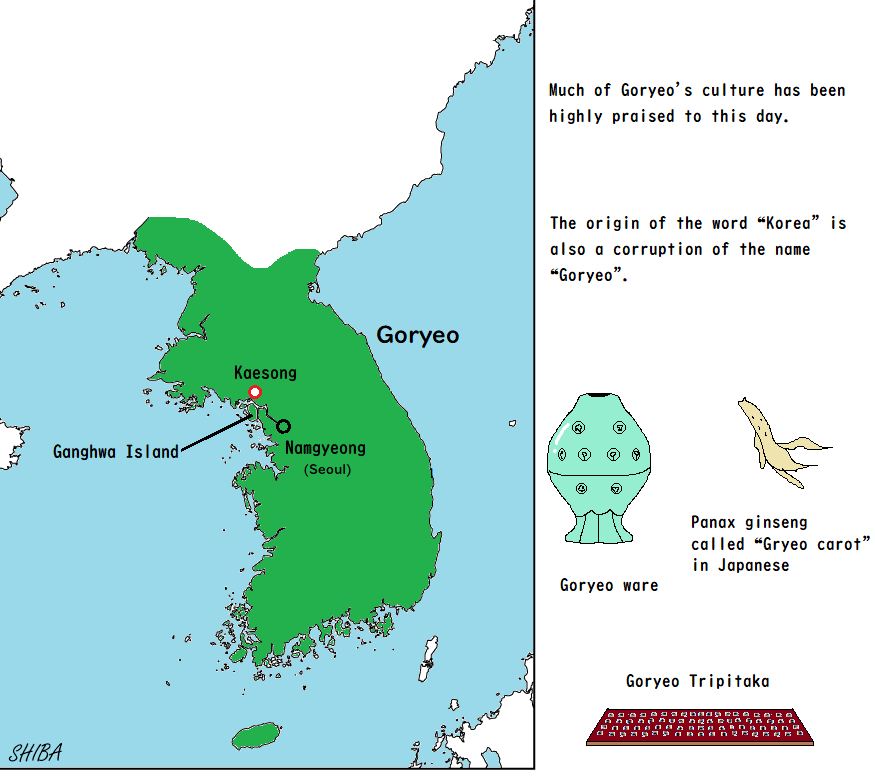
Becoming the capital
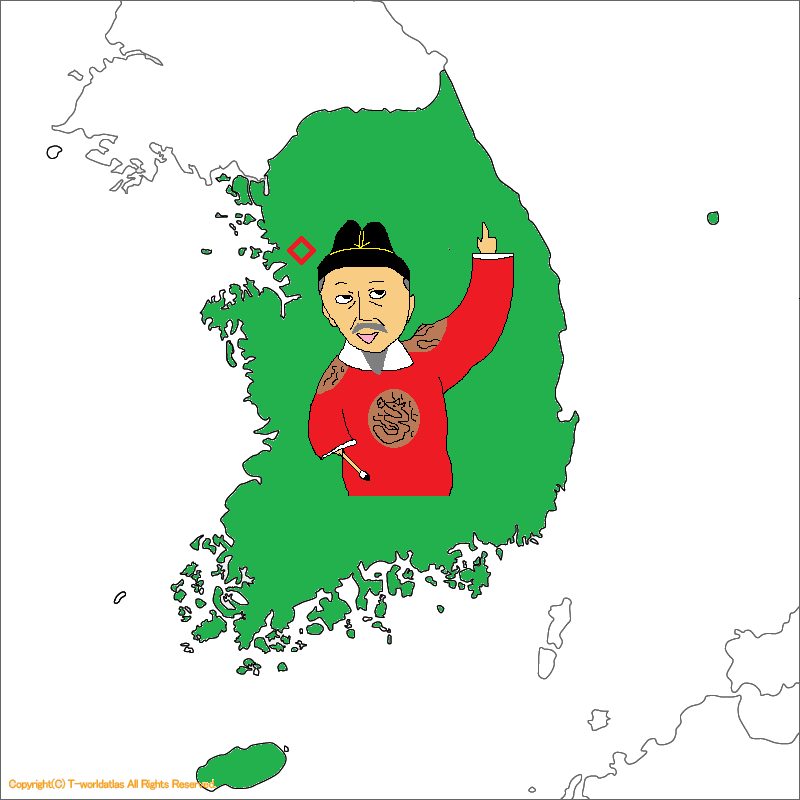
Seoul became the center of the Korean Peninsula during the Joseon(조선/朝鮮) Dynasty, which was established in 1392. In place of Goryeo, which was in turmoil due to internal conflict even after the Mongol withdrawal, this dynasty was built by a military man, Yi Sŏng-gye(이성계/李成桂). Compared to Tokyo and Beijing, Seoul was mountainous and had an advantageous terrain for defense. In addition, it is geographically located in a well-balanced location between north and south, and in 1394, it was selected as the capital of the Joseon Dynasty and was renamed “Hanseong(한성/漢城)”. After this, the Joseon Dynasty developed their own culture such as Hangul, Korean alphabet, invented by the fourth king, Sejong the great(세종대왕/世宗大王), and Neo-Confucianism by Yi I(이이/李珥) and Yi Hwang(이황/李滉).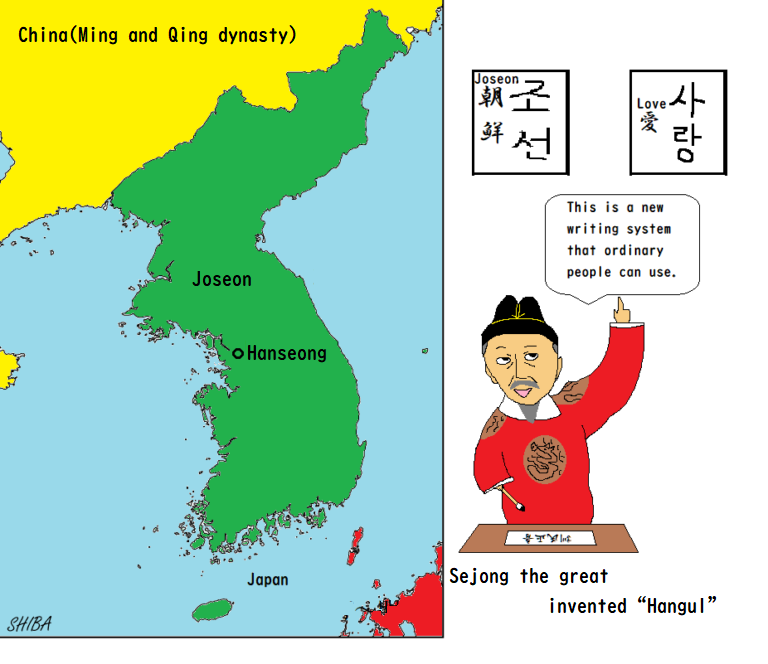 On the other hand, the dynasty was plagued by the invasion of Toyotomi Hideyoshi(豊臣秀吉)’s army, pressure from the Qing(清) dynasty, and internal conflicts between yangban (양반/兩班; Korean bureaucrats), but the dynasty overcame these problems and continued to exist for 500 years. Hanseong became the center of the dynasty both in name and reality.
Colonization and Division
However, in 1910, this dynasty was annexed by Japan, which was implementing an imperialist policy at the time, and Korea, renamed from Joseon to the Korean Empire(대한제국/大韓帝國) before the annexation, lost its independence. Under Japanese rule, Hanseong was once again renamed Gyeongseong(경성/京城), but this city maintained to be the center of the Korean peninsula, with the Japanese government establishing the base of its colonial government. As Japan’s harsh domination policies progressed, some people began to resist the domination by respecting the history and culture of the Korean people. The “March First Independence Movement” of 1919 was one of the largest. Yu Gwan-sun(유관순/柳寬順), one of the leaders of this movement, lost her family but did not waver in her beliefs and ended her short life after being tortured by the Japanese military police.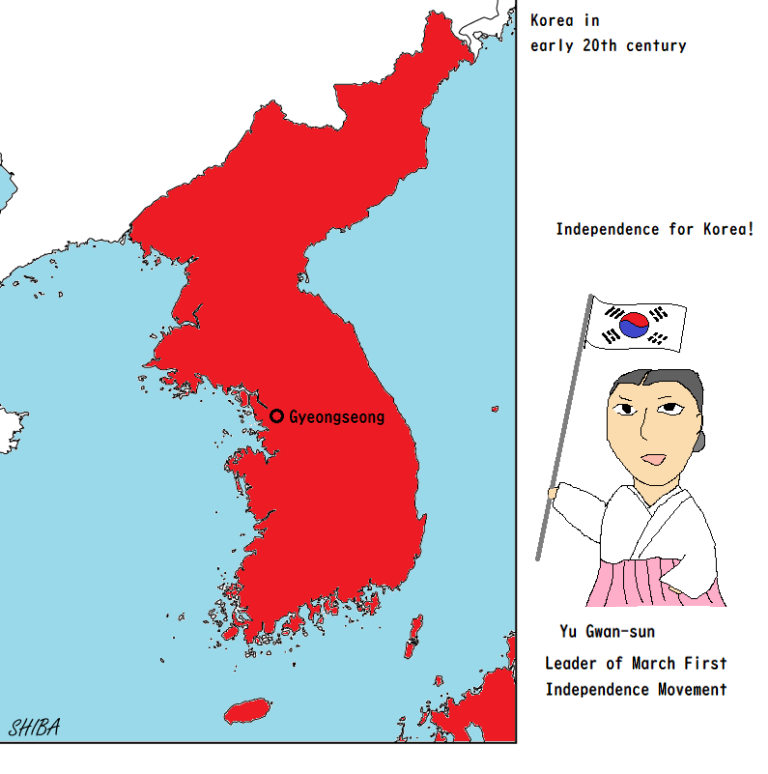 With the defeat of Japan in World War II in 1945, the Korean Peninsula broke away from its control. After being occupied by the victorious United States and the Soviet Union, it became independent in 1948.
However, at this time, there were two government, the one of Rhee Syngman (이승만/李承晚), who was pro-American, and one of Kim Il-sung (김일성/金日成), who was pro-Soviet. Each government refused to give in, “My government is the real one!” and two countries, South Korea and North Korea, were established in this region.
With the defeat of Japan in World War II in 1945, the Korean Peninsula broke away from its control. After being occupied by the victorious United States and the Soviet Union, it became independent in 1948.
However, at this time, there were two government, the one of Rhee Syngman (이승만/李承晚), who was pro-American, and one of Kim Il-sung (김일성/金日成), who was pro-Soviet. Each government refused to give in, “My government is the real one!” and two countries, South Korea and North Korea, were established in this region.
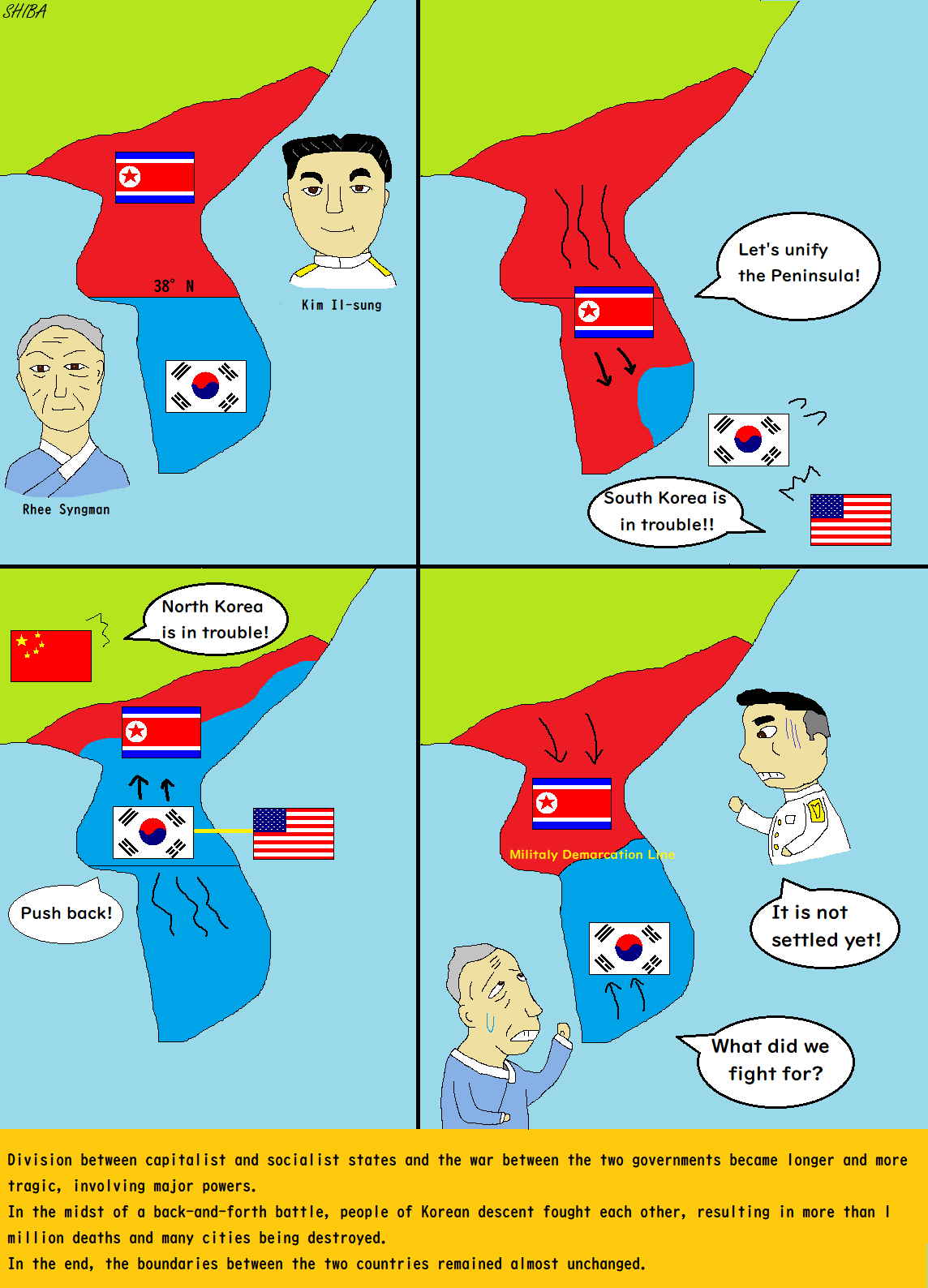 In 1950, the Korean War broke out to unify the two countries, resulting in over 1 million casualties. As of 2024, formal reconciliation between the two countries has not yet been achieved.
The reason Seoul cannot be written in Chinese Character
When the two countries were founded in 1948, the border between the two was set at 38 degrees north latitude, so Gyeongseong located south of that, became the capital of South Korea. At that time, the name of Gyeongseong was changed as it was the start of a new country. The new city’s name was “Seoul(서울)”, derived from the ancient Silla word “Seorabeol(서라벌),” meaning “capital”. This can be said to be an attempt to emphasize that the Han(韓) people have a unique history that is different from Japan and China. Ancient Silla is the language of the era before the introduction of Chinese characters, so there is no written Chinese character in Seoul. After the Korean War, Seoul successfully industrialized and grew into a world-class metropolis, hosting the Olympic Games in 1988. The current population is over 9 million. We have briefly looked at the history of Seoul and the Korean Peninsula above, and the name of this city can be easily understood just by introducing it here. “Hanseong(한성/漢城)” → “Hanyang(한양/漢陽)” → “Namgyeong(남경/南京)” → “Hanseong(한성/漢城)” → “Gyeongseong(경성/京城)” → “Seoul(서울)” You can see that it has been changed many times. However, the river that flows through the city is called “Hangang(한강/漢江)”, and the railway line connecting Seoul and Busan is called “Gyeongbu Line(경부선/京釜線)”. There are many that keep the old name remain here and there.