3rd century Romance of the Three Kingdoms of China and Yamatai of Japan


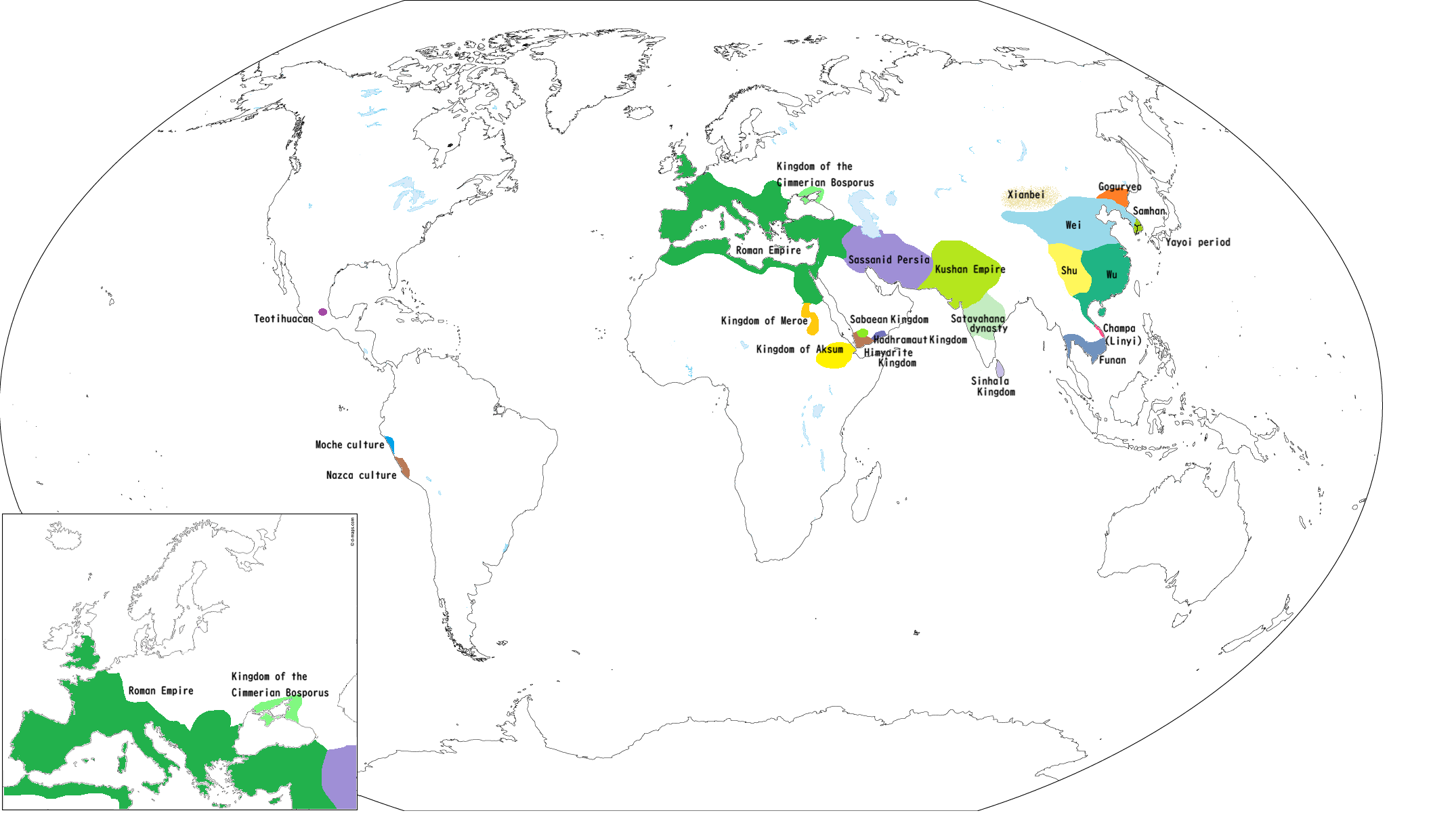
East Asia
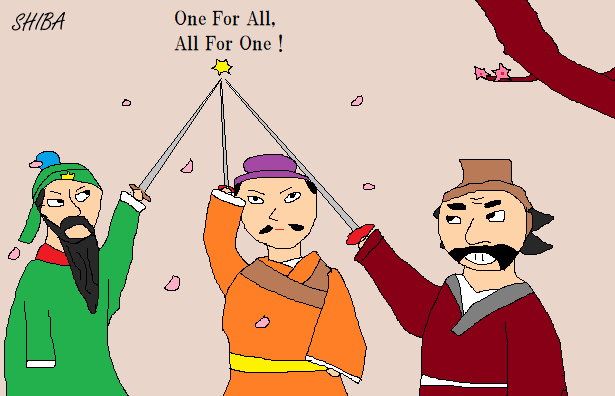
The 3rd century was a time when new powers rose one after another. In the Eastern Han (東漢), which was in confused due to the Yellow Turban Rebellion, powerful people such as Cao Cao(曹操) of Wei (魏) dynasty emerged. Those who opposed him were Liu Bei (劉備) of Shu Han(蜀漢) dynasty and Sun Quan(孫權) of Wu(吳)dynasty. The era of the famous “Romance of the Three Kingdoms(三國志)” has arrived.
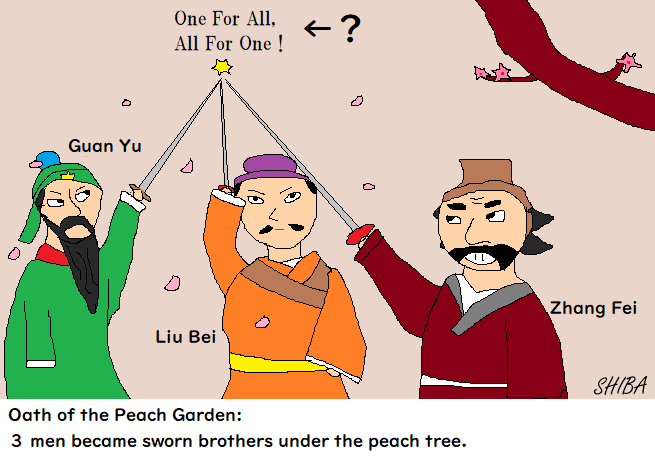
Wei destroyed Shu Han in 263 and took control of northern China. However, Wei was replaced by Sima Yan (司馬炎)of Western Jin (晋/西晋) in 265. In the latter half of the 3rd century, the Western Jin dynasty defeated Wu in 280 and temporarily unified China. But the “War of the Eight Princes(八王之乱)” occurred at the end of the 3rd century, so this prosperity did not last long.
Korea ,Japan
On the Korean Peninsula, with the fall of the Han(漢) Dynasty, the Goguryeo in the north expanded. In the south there lived a people called “Han(韓)”, and around this time they were divided into three groups: Mahan, Byeonhan, and Jinhan. These would later develop into the kingdom of Baekje, Silla and so on.
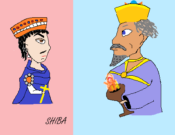
In Japan, there was once a king who sent envoys to the Easter Han. During this period there were also countries that sent envoys to Wei. A representative country is Yamatai-koku(邪馬台国). It was said that Queen Himiko(卑弥呼) unified the surrounding countries by allying with the mighty Wei. Her existence is still a mysterious figure, including that where Yamatai-koku was, this is because there was no written language in Japan at that time, and the only source that tells the details is a Chinese literature; in the case of Himiko, the “Gishi-Wajinden(魏志倭人伝)”: story about Japanese in the history of Wei.
South Asia
Northern India was ruled by the Kushan dynasty, which was defeated in its struggle for supremacy with the Sasanian dynasty around the mid‑third century and declined in inverse proportion to the Sasanians’ rise. In southern India, the Satavahana dynasty also collapsed during the third century after repeated incursions by the nomadic Saka people and ongoing secession by regional powers.
Politically, India was left without any major powers, but the earlier Brahmanism that had spread across the subcontinent began to absorb elements of Buddhism and various local religions, gradually transforming into a faith that was easier for ordinary people to accept. This marked the beginning of Hinduism.
In the far south of India there were societies of Tamil‑speaking peoples such as the Pallavas, the Pandyas, and the Cholas. Between the first and third centuries they produced poetry and other literature on themes such as love, which are known as Sangam literature and serve as valuable sources for understanding Tamil society and culture before the ideas and culture of northern India became deeply rooted there.
West Asia
In the Middle East, a great empire reappears in 224, The Sassanid Empire. This dynasty, founded by Ardashir I, destroyed the Parthian kingdom and restored the Persian dynasty. Shahpur I, who ascended the throne in 241, attacked the Kushan dynasty in northern India, causing this dynasty to decline. In the west, there were frequent battles with the Roman Empire over the border. In 260, Shapur I captured the Roman emperor Valerian, who was on the front lines in present-day Turkey (Battle of Edessa).
Many of the Roman captives captured contributed to the development of study and civil engineering in the Sassanid Empire. In the city where they lived, Gundesharpur (present-day southwestern Iran), hospitals and academic-related facilities such as libraries were also constructed.
Zoroastrianism, which worshiped fire and preached the confrontation between the god of good and the god of evil, became the most important religion of the Sassanid Empire. On the other hand, Christianity and Buddhism gradually entered the Empire. In the mid-3rd century, a new religion, Manichaeism, emerged that mixed these religions. Founder Mani advocated a doctrine based on Zoroastrian dualism (good and evil, light and darkness, etc.), and it spread from Europe to China after his death.
In the southern of the Arabian Peninsula, present-day Yemen, it prospered through trade (frankincense and spices) with the Roman Empire and Egypt via the Red Sea. And there were three Kingdoms, Himyar, Saba, and Hadhramaut. They had been fighting each other over control of the area since B.C.
At the end of the 3rd century, King Shammar of the Himyar joined forces with the Ethiopian kingdom of Aksum, which was across the Red Sea, and his kingdom became powerful. As a result, Saba and Hadramawt were annexed, and Yemen was unified by Himyar.
Europe
The Roman Empire also entered a new phase. In 212, Emperor Caracalla extended Roman citizenship to all inhabitants of the empire. As they became legally equal, the provinces, which were mainly economically successful, began to show signs of independence from the capital.
When the Sassanid Persian Empire was established in 224 and this emerging power began to repeatedly attack Rome, military personnel gained more say within Rome and began to influence the throne of the emperor. This was the so-called era of “Barracks Emperors”, and short-lived emperors were born one after another and disappeared through assassination or death in battle.
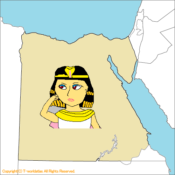
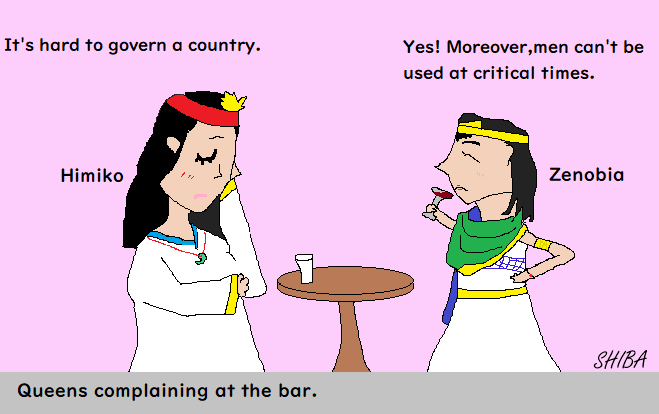
Taking advantage of the instability in the center, some provinces began to claim independence from Rome. In the west, the Gallic Empire (present-day France) emerged, and in the east, the Kingdom of Palmyra (present-day Syria) also did. In particular, Queen Zenobia of Palmyra, is known for conquering present-day Turkey and Egypt, and for showing an unyielding attitude against the mighty Roman army.
 In the end, these “independent kingdoms” were soon crushed when Rome regained stability at the end of the 3rd century, but those movements showed that vast Rome was no longer a monolith. Diocletian, who ascended the throne in 284, divided the country into four parts, and appointed four emperors, and controlled each region (Tetrarchy).
With this, Rome was finally able to end the era of unstable Barracks Emperors. However, by dividing the empire into four parts, this huge Empire would fall into the crisis of division many times after this.
Event
208 Battle of Red Cliffs (China)
212 Emperor Caracalla extended citizenship to all of Roman Empire
224 Ardashir I established the Sassanid Empire of Persia (West Asia)
239 Queen Himiko of Yamatai sent a messenger to Wei (Japan)
around 250 the Sassanid Dynasty invaded northern India. Dissolution of Kushan dynasty (India)
Mid-3c Great city established in Maya (Central America)
around 245 Manichaeism was established (West Asia)
260 Sassanid Shapur I captured the Roman Emperor, Valerian (West Asia)
263 Wei destroyed Shu Han (China)
265 Western Jin seized the throne from Wei (China)
273 Fall of the Kingdom of Palmyra (West Asia)
280 Western Jin destroyed Wu and unified China (China)
291 Rebellion of the Eight Kings ~306 (China)
293 Diocletian began the Tetrarchy (Roman Empire)