The meaning of Sri Jayawardenepura Kotte
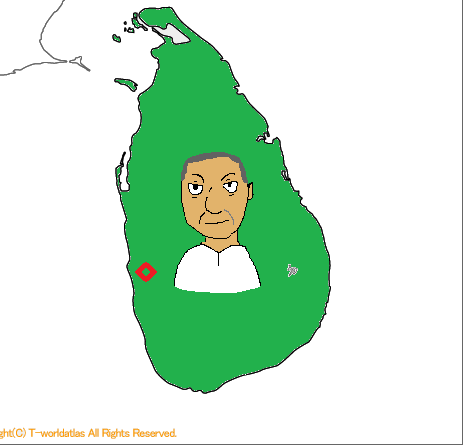
There are many proper nouns that feel strange in the world. “Scheveningen” is town of Netherland which is sounds like “a lewd person” in Japanese. “Obasanjo” is Nigerian ex-President who is male but sounds “old woman” in Japanese.
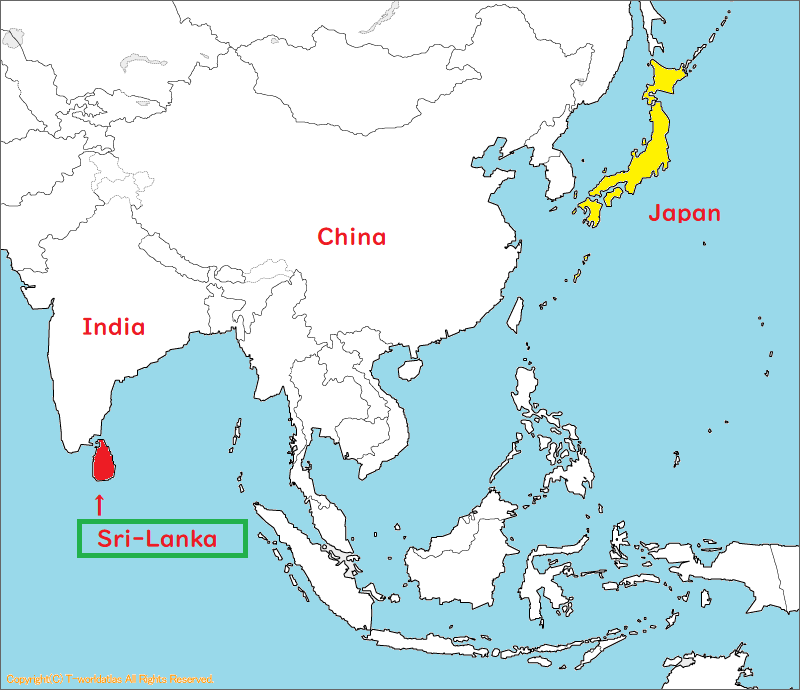
On the other hand, far long or short name is also memorable. “Tsu”, city of Japan, is one of the shortest name of places. In opposite, the typical place name far long is “Sri Jayawardenepura Kotte”. This city must be existed in the world map or data list of nations because it is the “capital” of Sri-Lanka. Haven’t you ever seen that the name of this city was written in so small font to the limited space? In this article, I would like to talk about this city along with the history of Sri-Lanka.
もくじ
The meaning of the name
The name of “Sri Jayawardenepura Kotte” can be separated “Sri”, “Jayawardenepura”, and “Kotte”. “Sri” means “Shining”, “Jayawardene” is the name of the president, “pura” means “town” and “Kotte” is the original name of this town. Then “Sri Jayawardenepura Kotte” meaning is “Shining Jayawardene’s town, Kotte”.
When the capital moved to Kotte was in 1983, before that the capital was Colombo; (I will explain about it later.) However it is not the first that Kotte is the capital of this country. About 400 years ago, Kotte had once been the capital.
Sinhala and Tamil
The history of Sri-Lanka (or Ceylon Island) was little studied at high schools in Japan, many people do not know the history of this country, so learn from the birth of Sri-Lanka, B.C, at first. The most people in Sri-Lanka were called Sinhala and many people of them are Theravada Buddhists.
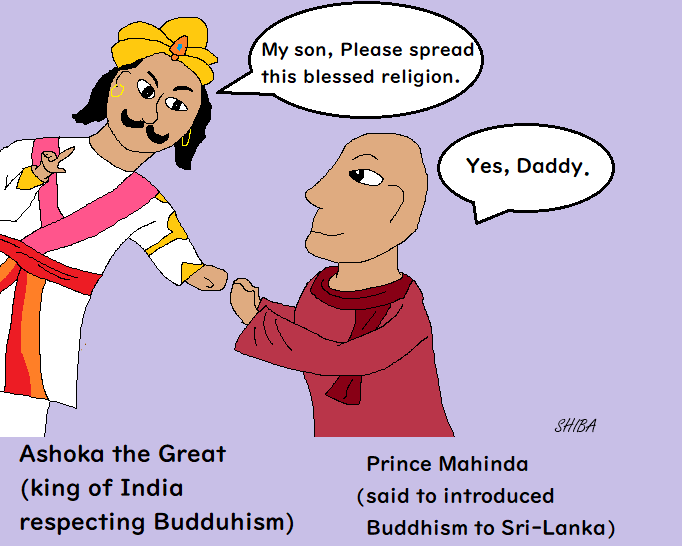
According one theory, the Sinhala kingdom was built in 5th or BC 4th century BC, and the capital was Anuradhapura, the north of Ceylon Island. In 3rd century BC, Buddhism was introduced from India. Who propagated Buddhism was in legend Mahinda, the prince of king Ashoka the Great.
On the other hand, Tamil people in South of India immigrated to Ceylon from 2nd to 1st century BC. They believed Hinduism later, frictions occurred between Sinhala, Buddhist, and Tamil, Hindu.
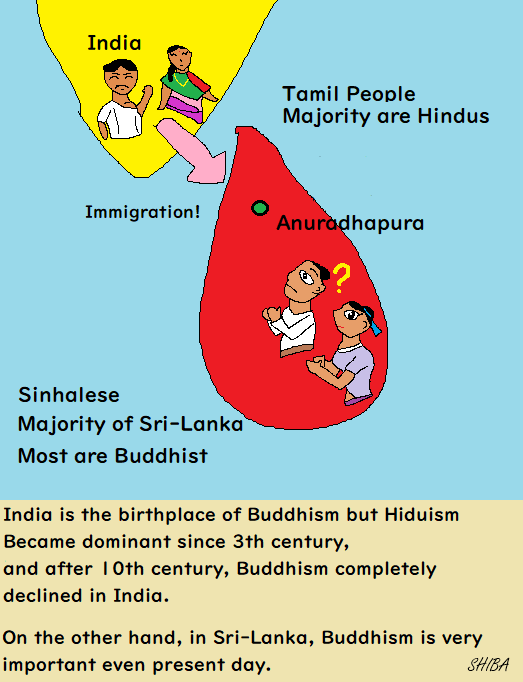
Sinhala kingdom remained over one thousand years in Anuradhapura, but the Chola dynasty built by Tamil in South India grew stronger in 10th century, and aimed Ceylon Island too. Chola dynasty invaded Ceylon in 1017, and occupied the north of this island. They moved the capital to Polonnaruwa, the southern from Anuradhapura.
Kingdom of Kotte and Age of Discovery
Soon Sinhala people reconstructed their kingdom at Polonnaruwa, driving out the Chola dynasty. However, conflict between both people were remained so the capital of the kingdom moved and moved. To protect from Tamil attack, a lot of citadels were built, one of them that was built on a corner of the coast in 14th century was Kotte.
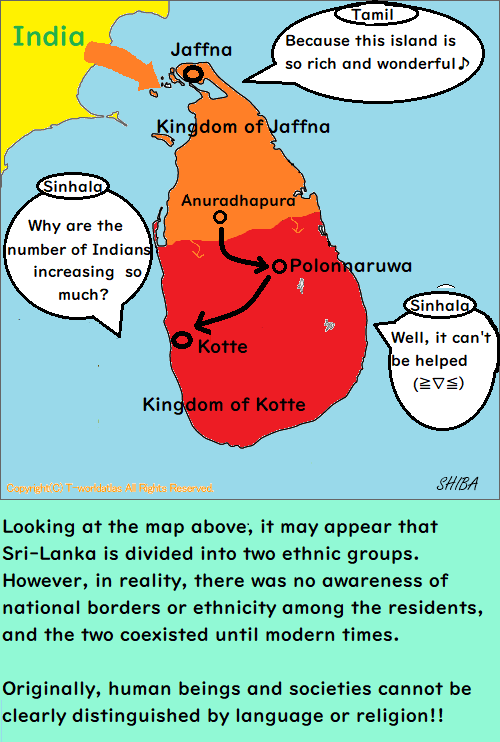
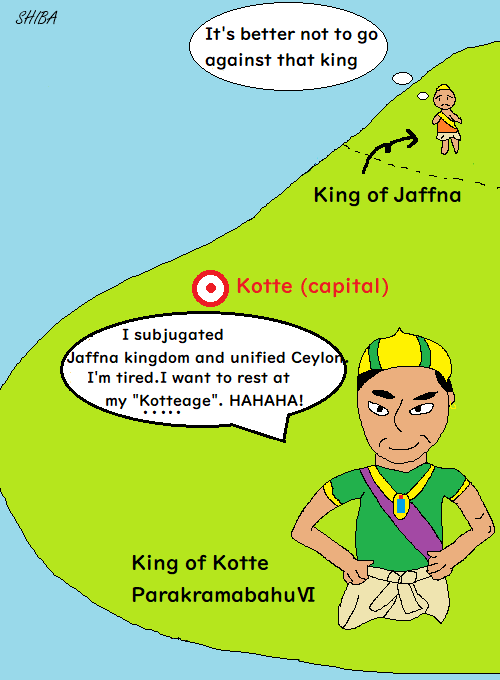
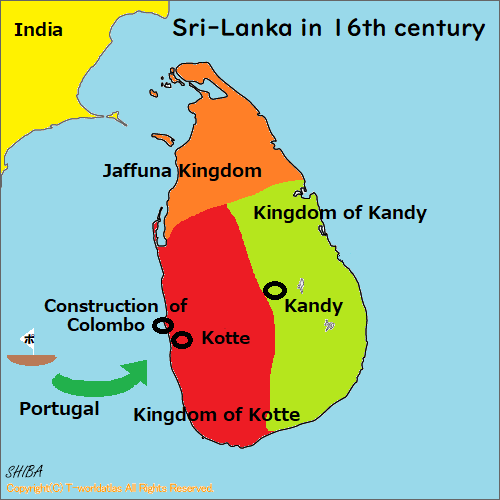
ParakramabahuⅥ, king of Sinhala, moved capital to Kotte in 1412. After that, the name of this kingdom was also called Kingdom of Kotte. ParakramabahuⅥ defeated Tamil and temporarily unified all of Ceylon. But after dying of this competent king, the unity of the Ceylon was broken. Kingdom of Jaffna (by Tamil) and Kingdom of Kandy (by Sinhala inland of Ceylon) became independent from Kotte.
Age of Discovery has come 16th century, Portuguese people visited Ceylon and they built a new port town in the north-west of Kotte, Colombo. Over time, the Portuguese gained influence in trade and began to intervene in the politics of Kotte. Kings of Kotte became “puppet” of Portugal, and Kingdom itself has been abolished in 1597. And the center of Ceylon also moved to Colombo, so Kotte was declining.
Colonial era
The ruler of Ceylon shifted from Portugal to Netherland and later to Great Britain. Kingdom of Kandy was also broken down in 19th century, all over the Ceylon Island turned into the colony of Britain.
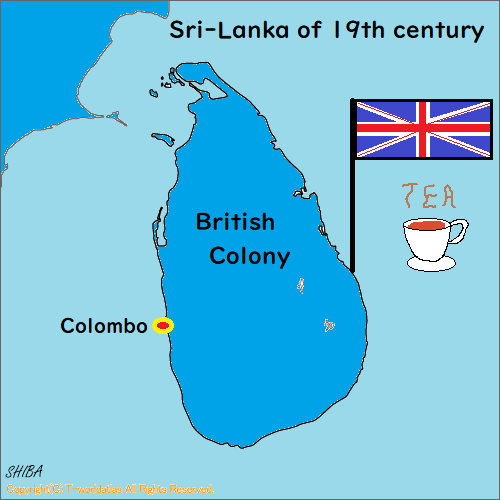
British people love tea, they made Sri-Lankan cultivate tea leaf and Brands such as Ceylon Tea were created. After the WWⅡ, following India and so on, this island had independence as “Ceylon”. The name of this country changed “Sri-Lanka” in 1972.
Ethnic conflict and the new capital
However, during this time, conflicts between Sinhala and Tamil people had continued. In the colonial era, Tamil, minority, was given preferential treatment by Britain, and many people were rich. Sinhala people had bad emotion to them.
After the independence, the government began to adopt policies that are advantageous to the Sinhala people. The constitution stipulated that Sinhala should be made the official language and that Buddhism should be accorded special status. Tamil people rebelled, and the conflict between them escalated into a civil war. In 1983 a large-scale armed conflict broke out in Colombo, the capital at that time and public order has deteriorated. Jayewardene, the president of Sri-Lanka at that time, decided to move the capital.
Kotte, “the old capital”, which is smaller and safer than Colombo was selected as “a new capital”. Moving the capital, the president changed the name of Kotte to “Sri Jayawardenepura Kotte” meaning “Shining Jayawardene’s town Kotte”. The part where he includes the name of “Jayawardene”is a good representation of his politician-like personality.
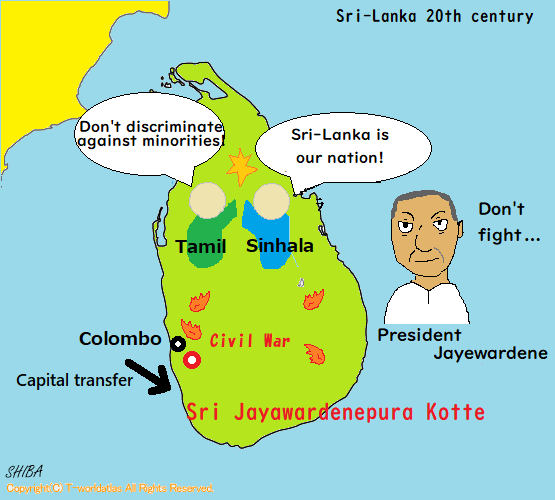
Thus Sri Jayawardenepura Kotte was born. But even now the actual center of Sri Lanka is the former capital, Colombo, which has the largest population, and Sri Jayewardenepura Kotte retains a somewhat idyllic atmosphere.