When Beijing became the capital of China?

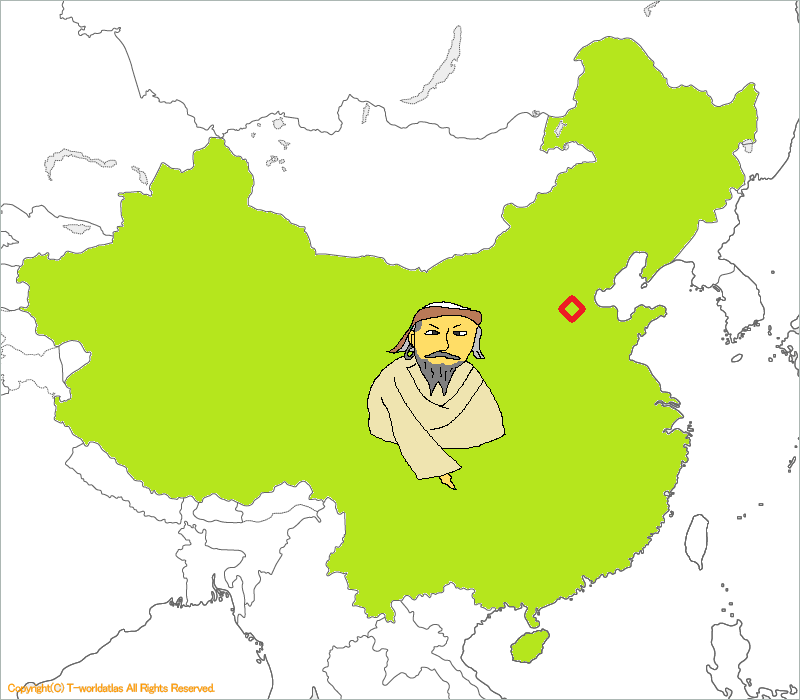

The summer Olympic games in 2008, and winter Olympic games in 2022 were both held in Beijing. It was the first time that summer and winter Olympic games held in the same city. The meaning of Beijing(北京) is the “north” “capital” and it is so cold that the winter Olympic games can be held. By the way, when Beijing became the capital of China? I think there seem to be a lot of places warmer and more comfortable in vast China…
もくじ
China’s ancient capital is…
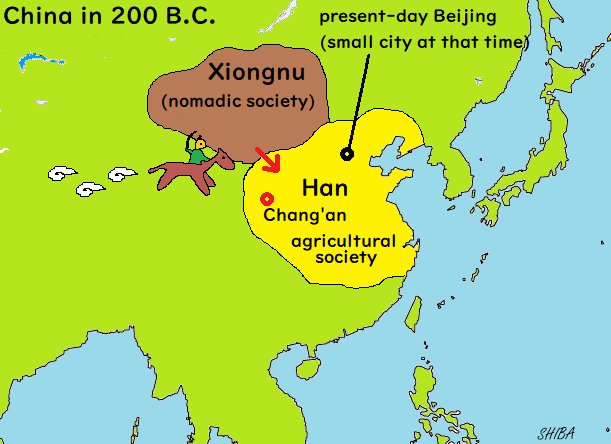
It is said that China has a 4000-year long history, but the history is also the repetition of division and integration. In “Spring and Autumn period” and “Warring States period” (8-3c BCE) there were a lot of kingdoms in China, Yan(燕) Chu(楚) etc. Finally, Qin Shi Huang(秦始皇) integrated these kingdoms in 221 BC. The city of Beijing at present was the capital of Yan and called “Ji(薊)” at that time. However Yan was defeated by Qin(秦) and Ji fell into one of the regional cities. The capital of Han(漢) or Tang(唐), the dynasty after Qin, was Luoyang(洛陽) and Chang’an(長安) located in the Yellow River basin far southern of Beijing.
Nomadic robbing and the Great Wall
On the other hand, there is wide and wide grass field in north of China, people living there were mainly nomads running with horses or sheep until modern times. Famous nomad people are Mongolian such as Genghis Khan, but before they was born, a lot of nomad people, Xiongnu (匈奴), or Göktürks (突厥) and so on, lived in the grass field area. They sometimes trespassed into Chinese agricultural society and robbed people and things there.
To prepare for their trespass Ancient Chinese people built defensive walls. These walls were replied extension and renovation and became “The Great Wall”.
After falling of Tang(唐) dynasty, The “Five Dynasties and Ten Kingdoms period” has started that many short-lived dynasties was born and fallen. Durling this confusing time, nomad people from northern area trespassed into China again. They were called “Khitan(契丹)” and built Liao(遼) dynasty in the north of China. In the later of 10th century, Song(宋) dynasty ended the confusing of China. However, Song would be troubled by Liao’s presence.
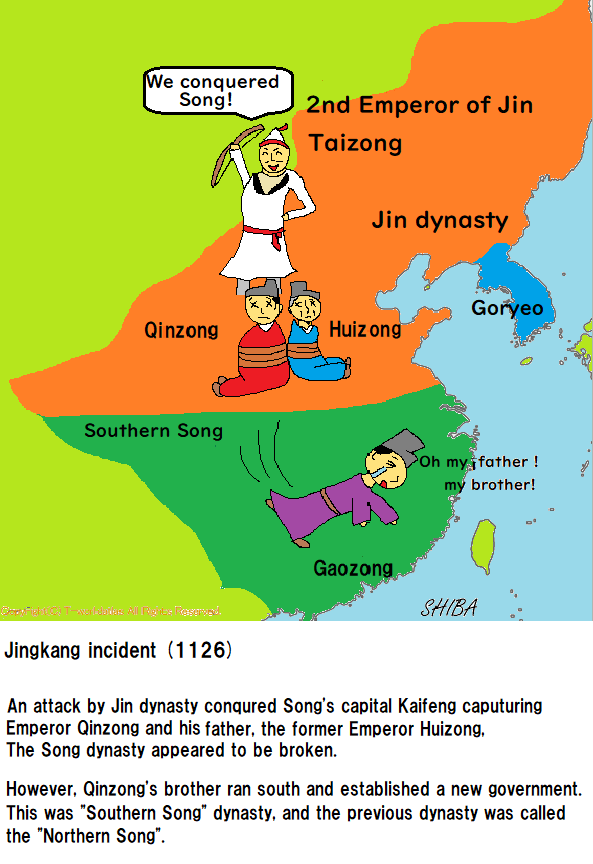
In the 12th century, “Jurchen(女真)” people in Manchuria had power and they built “Jin(金)” dynasty. Jin and Song defeated Liao and expelled Khitan west. However, soon a conflict arose between the Jin and the Song. In 1126, the Emperor of Song was captured by Jin. It was called “Jingkang incident(靖康之变)”. After that, the territory of the Song (南宋:Southern Song) was limited to the area south of the Yangtze River.
Liao, Jin and Yuan
These dynasties such as Liao or Jin, despite being nomadic tribes, formed a complex society that also ruled over the agricultural Han Chinese. Their capital was strategically located, exerting influence over both sides. What drew attention was the city positioned at the border between nomadic and agricultural territories, serving as a trading hub—this was the present-day “Beijing”.
Jin moved its capital to this city and named “Zhongdu(中都)”.Thus “Beijing” was reconstructed as the capital of this dynasty, however this city developed larger was after The Mongol Empire was born in the 13th century. The Mongol Empire that was constructed by Genghis Khan destroyed the Jin dynasty and dominated the Middle East and Russia during the generation of his descendants. After that, the fifth Emperor, Kublai Khan aimed Song dynasty.
The capital of Mongol Empire was Karakorum located in the middle of the steppes. But Kublai Khan moved the center to Zhongdu. He named his dynasty “Yuan(元)” , and changed the name of “Zhongdu” to “Dadu(大都)”. Song dynasty was broken down in 1279 by Yuan.
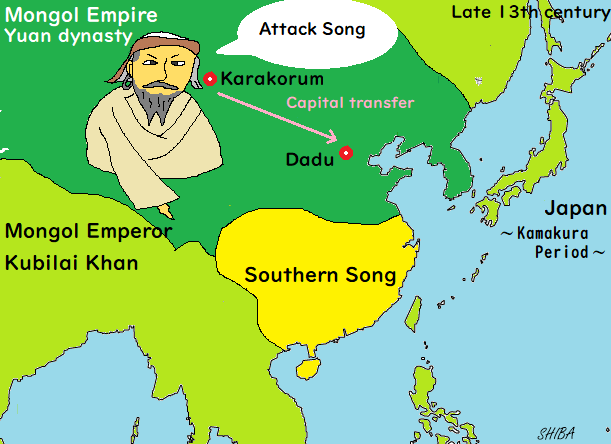
Every Emperor put traders under protection and maintained the roads connecting the wide empire, so much wealth flowed in Dadu and this city developed “Large City” (it is meaning of Dadu). The prototype of the “Forbidden City(紫禁城)”, the residence of Emperors of China was also built during the time of this dynasty.
Two “capitals” of China
In the late 14th century, Yuan’s society became confusing, Zhu Yuanzhang(朱元璋) from south of China revolted against Yuan and built Ming(明) dynasty in 1368. In the same year Yuan (Mongol) people left Dadu and ran to the northern grassland.
Ming’s capital was Yingtianfu (应天府) at first, but it was moved to Dadu by Yongle Emperor, the 3rd emperor of Ming. Although Mongol people in the north became weak, the emperor felt anxiety about them.
After “Dadu” became capital, Yingtianfu maintained the position of “sub-capital”, both cities came to be called “Beijing(北京)” and “Nanjing(南京)”. The meaning of “Beijing” is “Northern Capital”, “Nanjing” is “Southern capital”. Beijing was also the capital of Qing(清) dynasty. In the time of Republic of China, built after Xinhai Revolution(辛亥革命), Nanjing was the capital of this country for a period of time. Except for this period, the capital of China has been Beijing to this day.
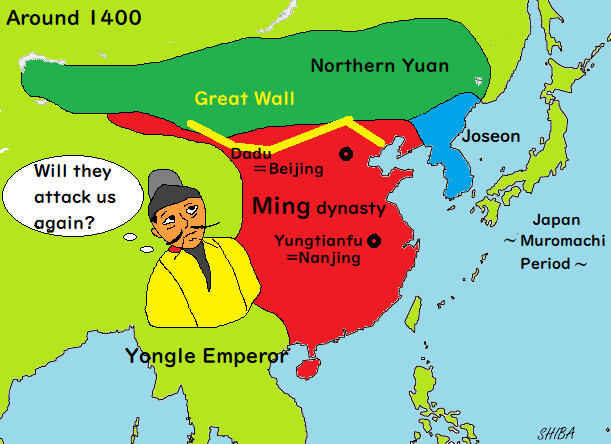
One of the most important reasons that Beijing became the capital of China, this city is on the border of nomadic society (ex. Mongolian) and agricultural society (ex. Han Chinese). The Great Wall which was built to defend nomad people’s invasions is also near this city. Beijing is important city of not only politically and economically but also strategically.